Client: City of Prokuplje
Author: Riste Dobrijević
Year: 2024
Location: Hisar Hill, Prokuplje, Serbia
Photographer: Svetlana Dingarac
The Concept
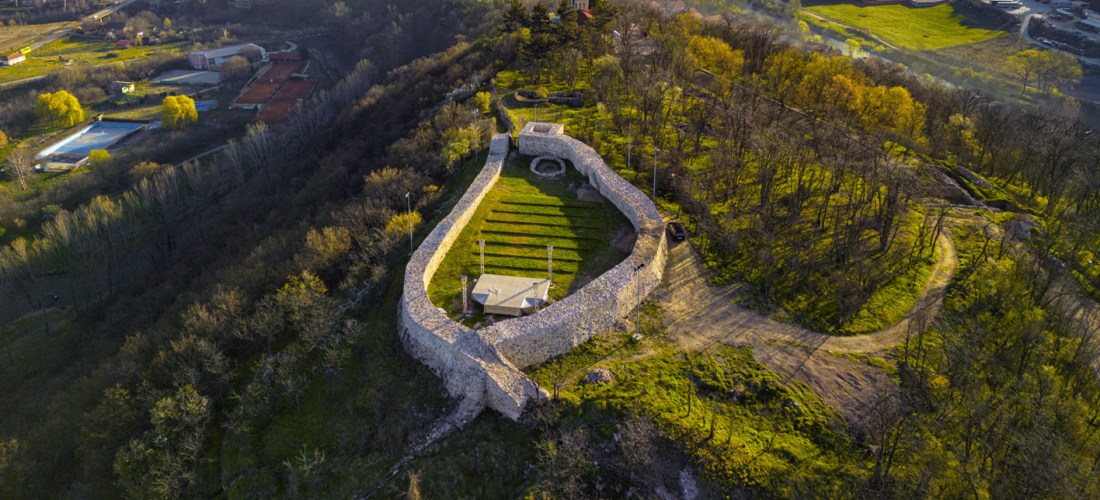
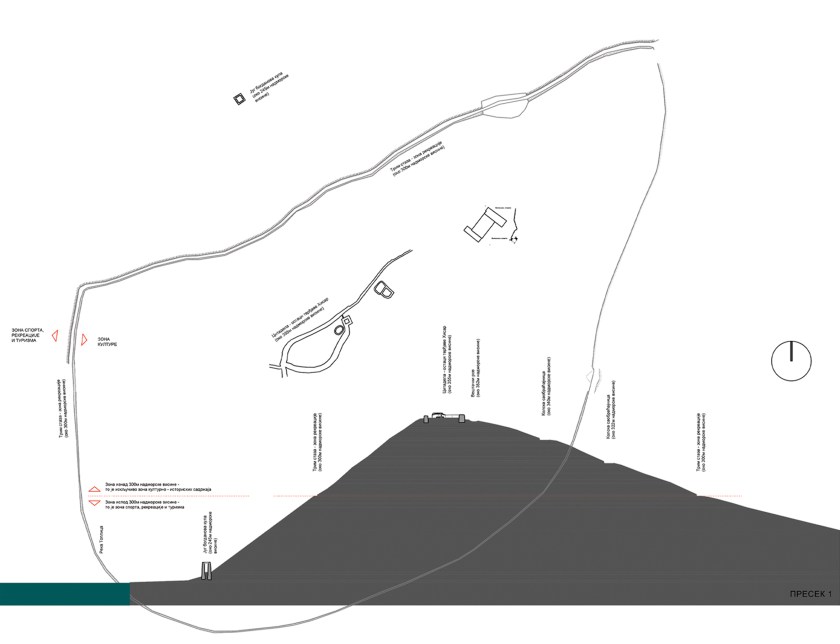
Out of a decades-long need and desire to reconstruct and revive the neglected area of the Hisar Fortress, and with financial support from the Ministry of Culture of the Republic of Serbia, a multifunctional space for various cultural activities was created — a cultural sanctuary for all the people of Prokuplje. By analyzing the space of the citadel and the goals of its revival, it is undeniably evident that within the remains of the old fortress walls, the space has already formed its own unique connection with nature, the sky, and the sun. So the main goal was to ensure that the proposed structures would not be too dominant, and that their scale would not pose a threat to the presence and ambiance of the cultural monument.
The Lightness
It is clear that any kind of intervention could potentially disrupt the existing values of this space. The design brief required finding a solution to realize the long-standing idea of the people of Prokuplje — to create a summer stage on this elevated site. When considering the proper dimensions for the stage and theater area, the goal was to ensure that the proposed structures would not be too large, and that their scale would not pose a threat to the ambiance of the cultural monument.
On the question of the stage:
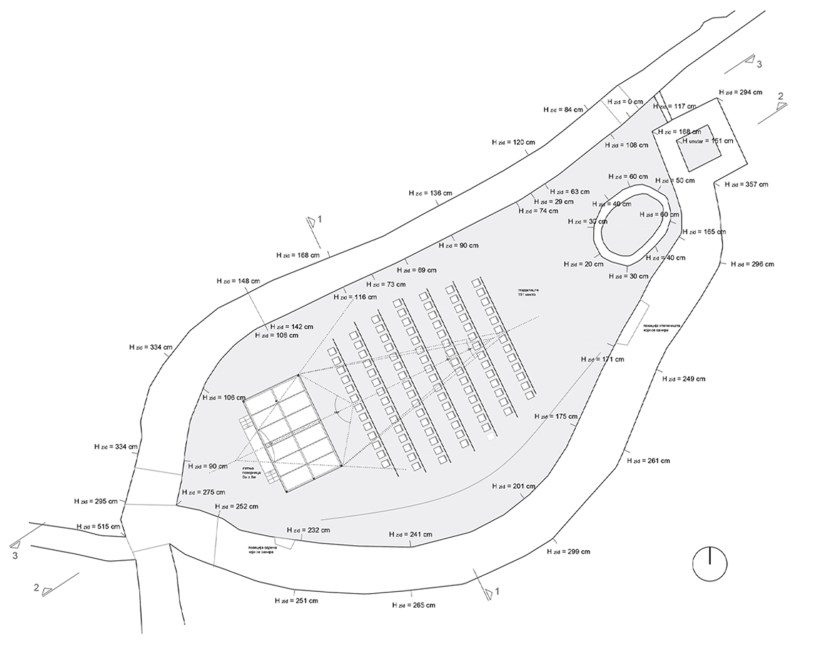
Due to its size, the stage becomes the tallest point in the space, and as such, it was essential in later design phases to choose the most appropriate materials. It was designed as a modular and removable structure.
On the question of the seating area:
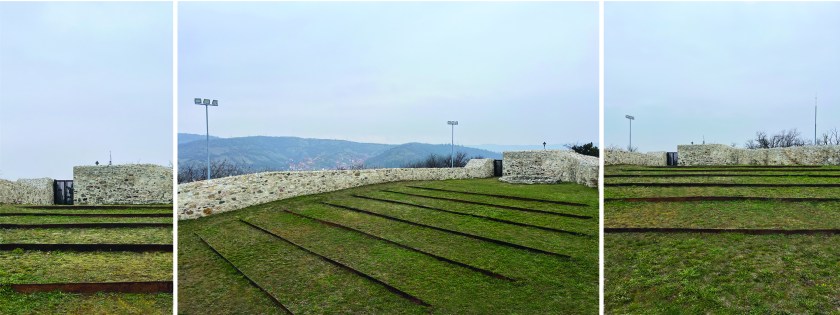
A noticeable height drop can be felt on the citadel itself, and the natural slope was used as a logical direction to lay out the rows of seats. Grass was chosen as the dominant materialization of the entire citadel plateau.
On the question of wall preservation:
In some areas, landslides and damage were visible on the old fortress walls. It was imperative that the Institute for the Protection of Cultural Monuments repair all areas where the fortress walls were damaged. The aim during the repair process was to perform only minimal interventions, focused on conservation and partial reconstruction. It was considered that any major intervention could endanger the historical character and temporal value of the site. The true aim of protecting the fortress was sought through conservation.
The Solution
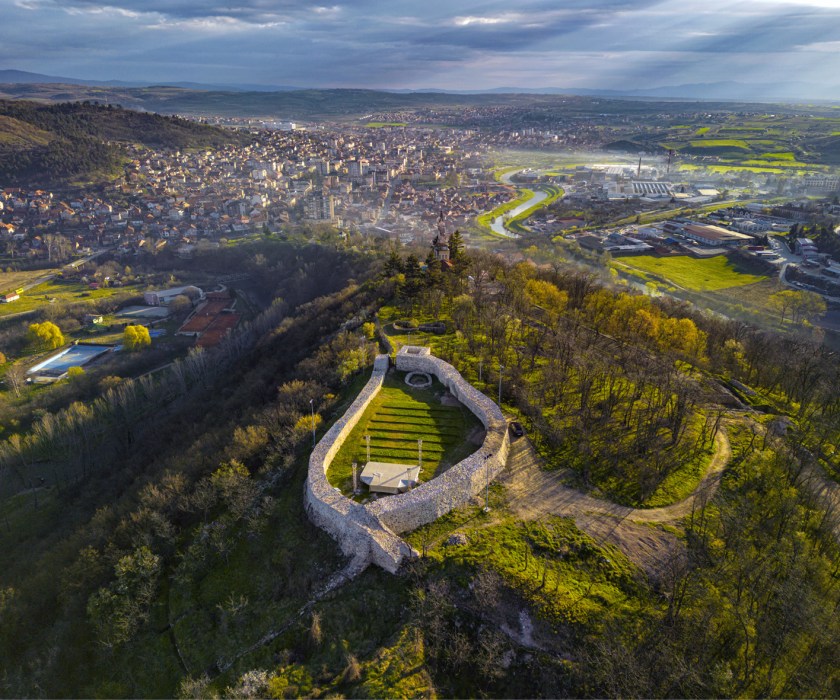
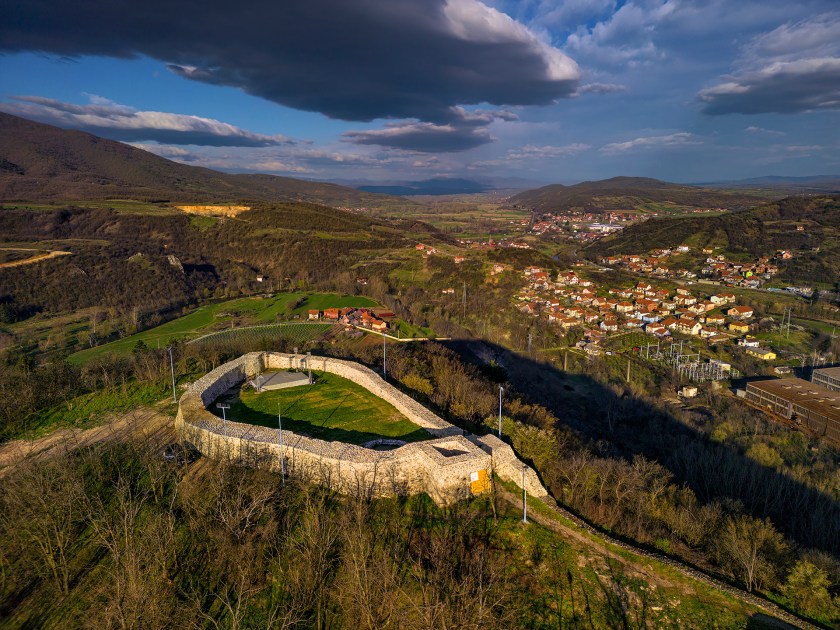
During the design phase, the space was defined by an auditorium that blends into the surface of the citadel, and a stage designed to be modular and removable. While work was being carried out on the citadel plateau, the Niš Institute for the Protection of Cultural Monuments worked in parallel on the conservation and partial reconstruction of the old ramparts, the donjon tower, and the installation of a new gate.
New vertical planes were woven directly into the citadel terrain, creating parallel lines that, through their clean form and visual composition as a modern intervention, respect the existing citadel ramparts. The rampart lines, through their reconstruction, have remained dominant. Their visual weight gives priority over the stage, which is deliberately non-dominant. The seating structures (auditorium) will remain integrated into the terrain over time.
The modular stage is small and does not dominate the ramparts with its mass. The fortress walls on Hisar have been partially reconstructed and now stand somewhat taller than they did at the initial concept stage. The current proportions, in line with the rampart reconstruction, strike a good balance. The stage is perceived as a temporary structure — present only when needed — and this good balance would not have been achieved had the ramparts remained at their previous height.
The vertical planes remain even when the stage is removed. Through their geometry, they support the citadel plateau visually; they are more visually present and structured than the stage itself, yet still far subtler than the ramparts. The observer clearly perceives a hierarchy — first the rampart line, then the rows of vertical planes, and finally the stage, barely noticeable, almost as if it isn’t there.
Regarding the time before and after the reconstruction — and the decision of to what extent to intervene in the space, even down to the exact final height of the ramparts — it can now be seen on Hisar. The observer notices something new in the space, but only in the part where the seating is, and only in the form of parallel lines. This spatial intervention has created a new synergy between the old and the new, without in any way disturbing what has stood on Hisar Hill for seven centuries.
 C A D O