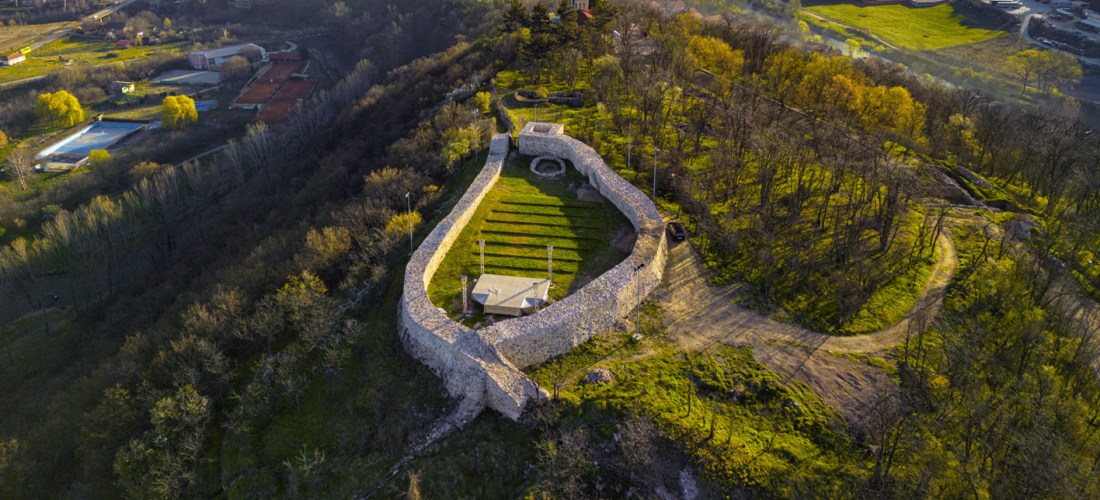
Hisar Fortress Revitalization

architecture, built projects, reconstruction and conservation

Client: City of Prokuplje

Author: Riste Dobrijević

Year: 2024

Location: Hisar Hill, Prokuplje, Serbia

Photographer: Svetlana Dingarac
The Concept

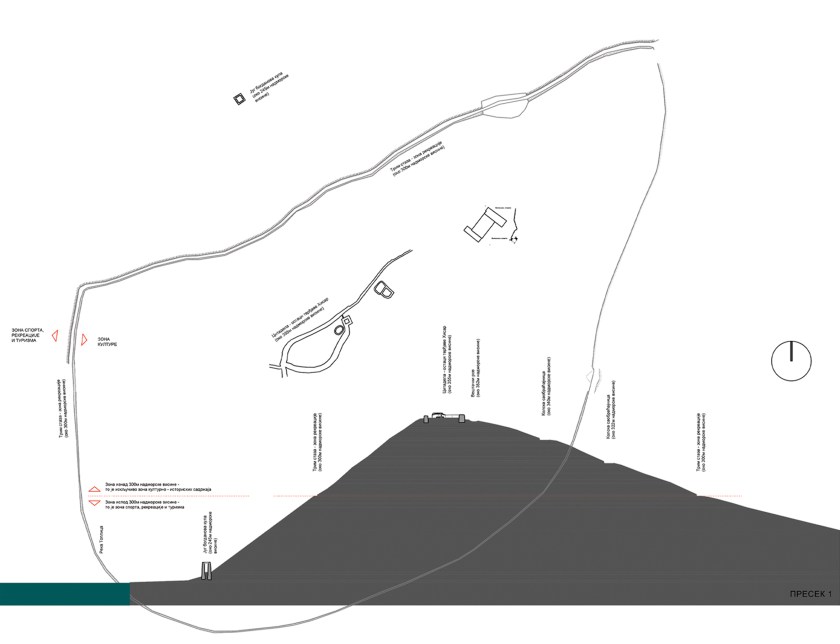
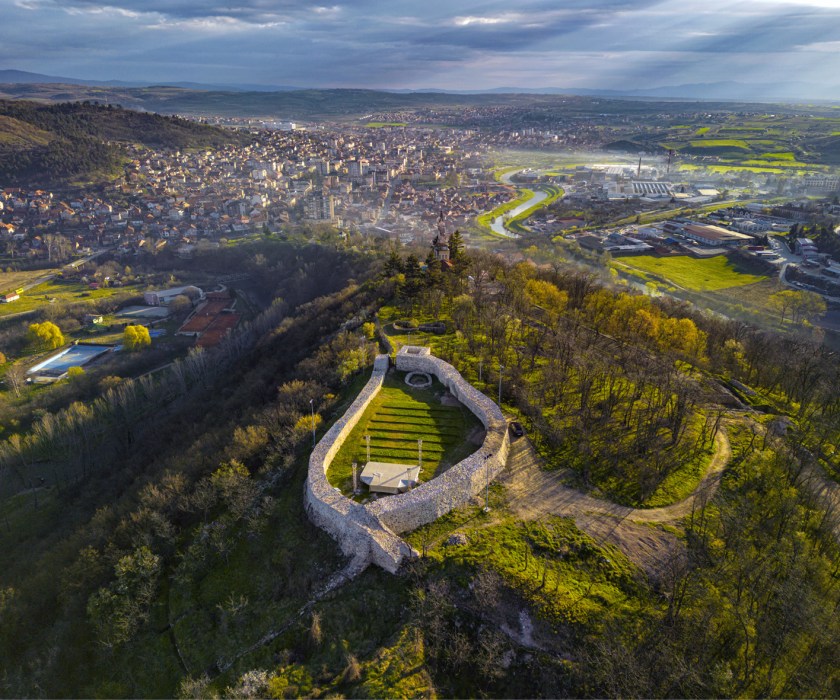
Out of a decades-long need and desire to reconstruct and revive the neglected area of the Hisar Fortress, and with financial support from the Ministry of Culture of the Republic of Serbia, a multifunctional space for various cultural activities was created — a cultural sanctuary for all the people of Prokuplje. By analyzing the space of the citadel and the goals of its revival, it is undeniably evident that within the remains of the old fortress walls, the space has already formed its own unique connection with nature, the sky, and the sun. So the main goal was to ensure that the proposed structures would not be too dominant, and that their scale would not pose a threat to the presence and ambiance of the cultural monument.
The Lightness

It is clear that any kind of intervention could potentially disrupt the existing values of this space. The design brief required finding a solution to realize the long-standing idea of the people of Prokuplje — to create a summer stage on this elevated site. When considering the proper dimensions for the stage and theater area, the goal was to ensure that the proposed structures would not be too large, and that their scale would not pose a threat to the ambiance of the cultural monument.

On the question of the stage:
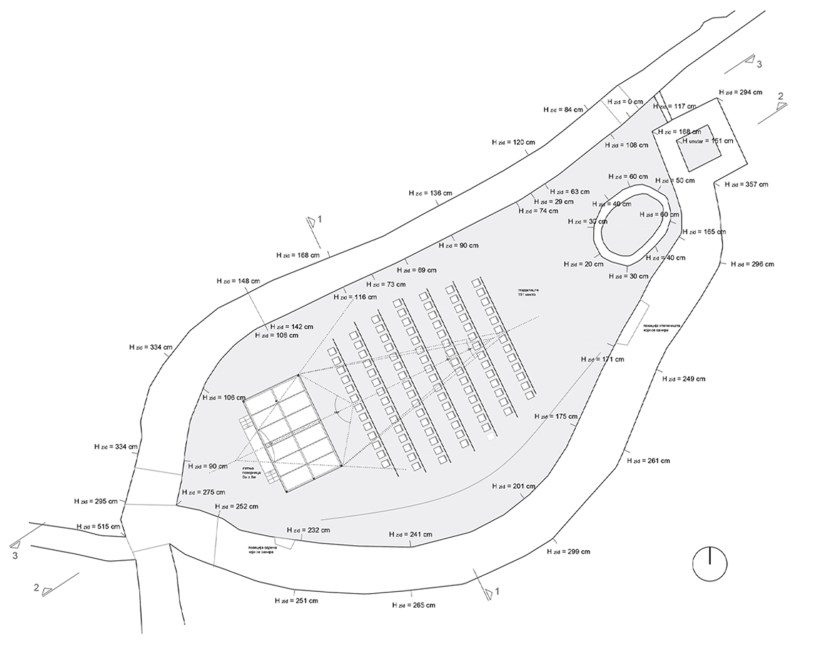
Due to its size, the stage becomes the tallest point in the space, and as such, it was essential in later design phases to choose the most appropriate materials. It was designed as a modular and removable structure.

On the question of the seating area:
A noticeable height drop can be felt on the citadel itself, and the natural slope was used as a logical direction to lay out the rows of seats. Grass was chosen as the dominant materialization of the entire citadel plateau.

On the question of wall preservation:
In some areas, landslides and damage were visible on the old fortress walls. It was imperative that the Institute for the Protection of Cultural Monuments repair all areas where the fortress walls were damaged. The aim during the repair process was to perform only minimal interventions, focused on conservation and partial reconstruction. It was considered that any major intervention could endanger the historical character and temporal value of the site. The true aim of protecting the fortress was sought through conservation.
The Solution

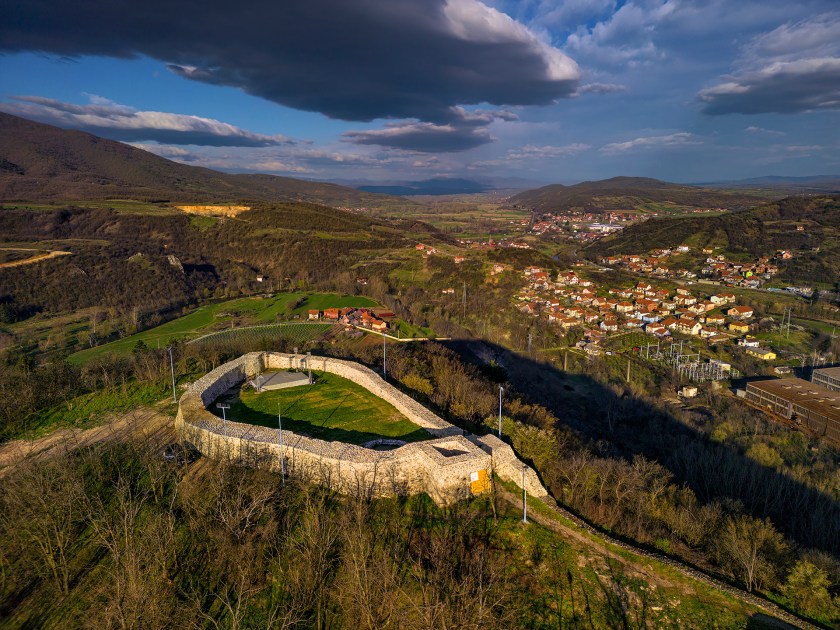
During the design phase, the space was defined by an auditorium that blends into the surface of the citadel, and a stage designed to be modular and removable. While work was being carried out on the citadel plateau, the Niš Institute for the Protection of Cultural Monuments worked in parallel on the conservation and partial reconstruction of the old ramparts, the donjon tower, and the installation of a new gate.

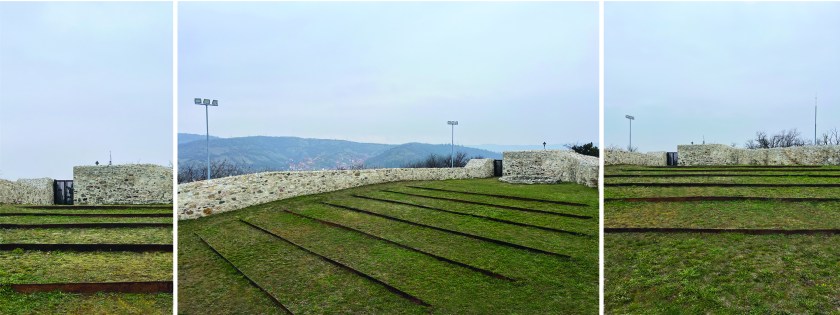
New vertical planes were woven directly into the citadel terrain, creating parallel lines that, through their clean form and visual composition as a modern intervention, respect the existing citadel ramparts. The rampart lines, through their reconstruction, have remained dominant. Their visual weight gives priority over the stage, which is deliberately non-dominant. The seating structures (auditorium) will remain integrated into the terrain over time.

The modular stage is small and does not dominate the ramparts with its mass. The fortress walls on Hisar have been partially reconstructed and now stand somewhat taller than they did at the initial concept stage. The current proportions, in line with the rampart reconstruction, strike a good balance. The stage is perceived as a temporary structure — present only when needed — and this good balance would not have been achieved had the ramparts remained at their previous height.

The vertical planes remain even when the stage is removed. Through their geometry, they support the citadel plateau visually; they are more visually present and structured than the stage itself, yet still far subtler than the ramparts. The observer clearly perceives a hierarchy — first the rampart line, then the rows of vertical planes, and finally the stage, barely noticeable, almost as if it isn’t there.

Regarding the time before and after the reconstruction — and the decision of to what extent to intervene in the space, even down to the exact final height of the ramparts — it can now be seen on Hisar. The observer notices something new in the space, but only in the part where the seating is, and only in the form of parallel lines. This spatial intervention has created a new synergy between the old and the new, without in any way disturbing what has stood on Hisar Hill for seven centuries.
Reconstruction of apartment in Belgrade

built projects, interior

client: Ross Bull, Coexistance

architect: Riste Dobrijević

project: 2017 – 2018

construction: 2018 – 2019

area: 80sqm

location: Belgrade, Serbia

photographer: Relja Ivanić

  1. Background

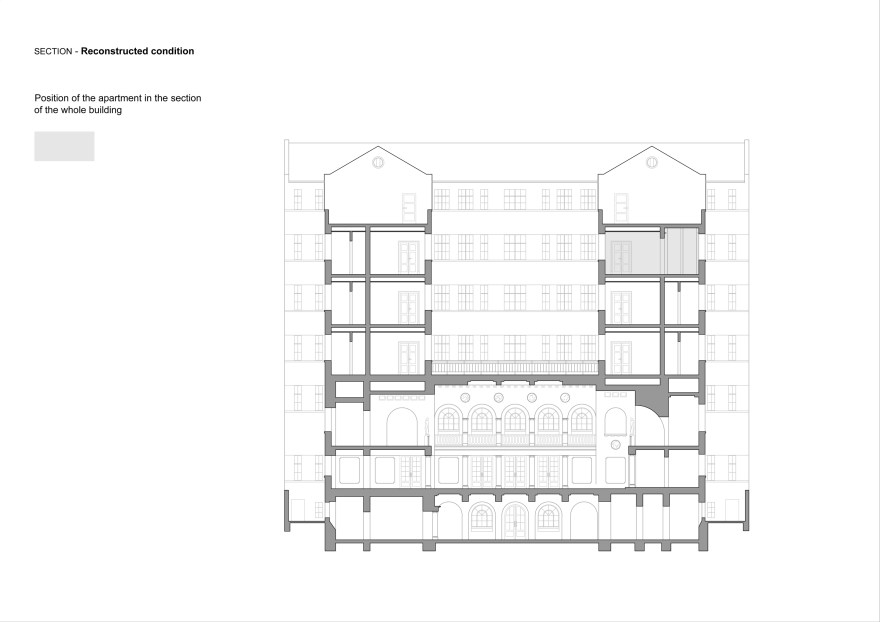
During 1927-29, the Belgrade architect Dimitrija M. Leka designed and constructed a building at Makedonska 21.

The building has all the characteristics of academism as reflected in Leka’s solutions for clear form, spatial organization, reduced academic decoration, and emphasis on the monumentality of “timeless” buildings. All these elements, characteristic of the architecture of the period, make this building one of Belgrade’s great representatives of academism in the period between the two world wars.

2. Description of the apartment’s previous state

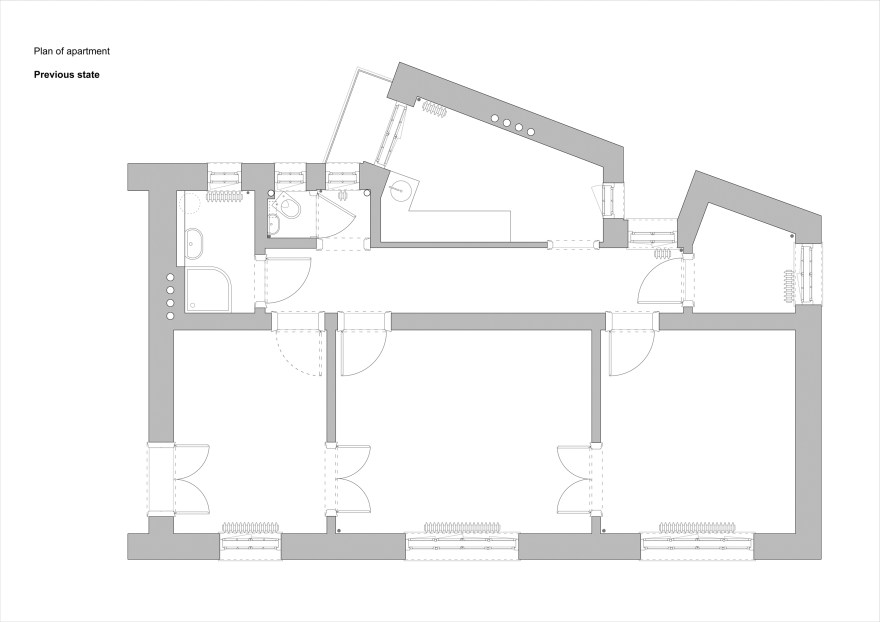
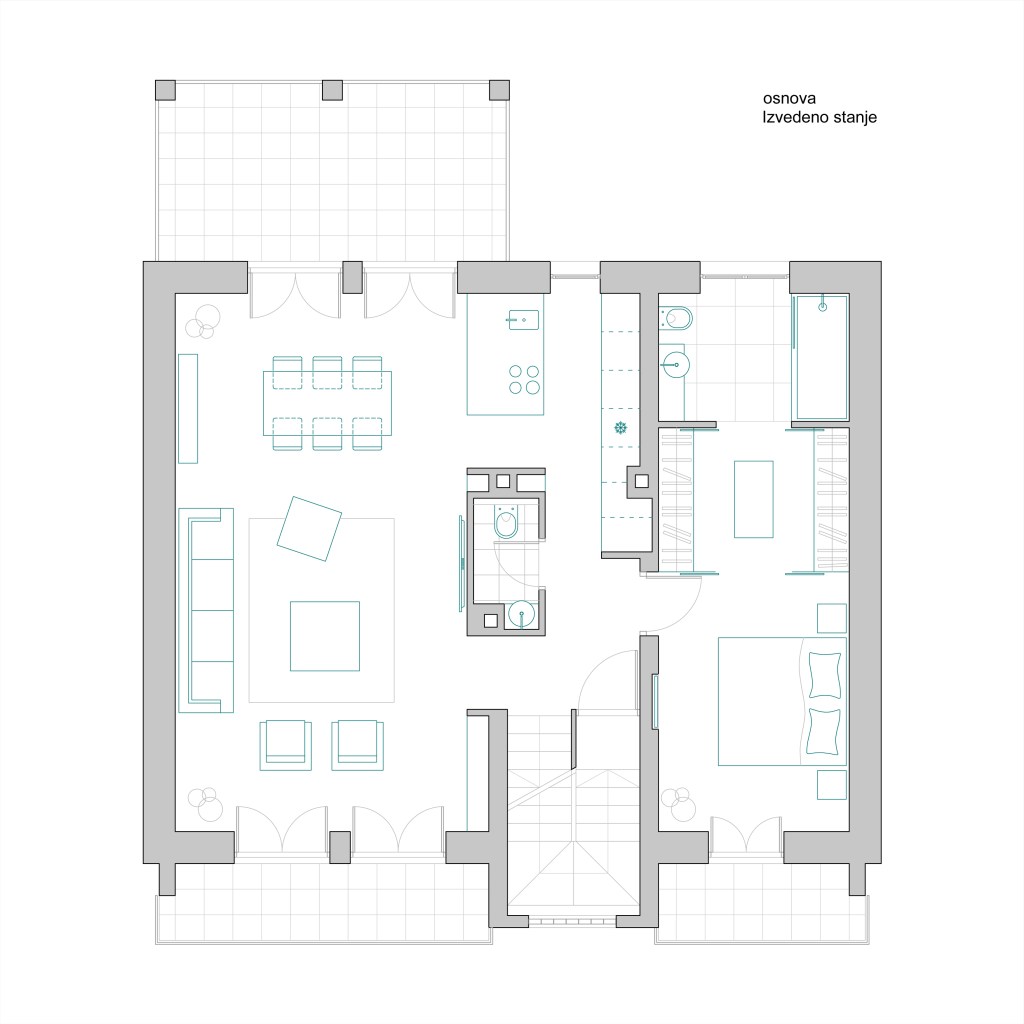
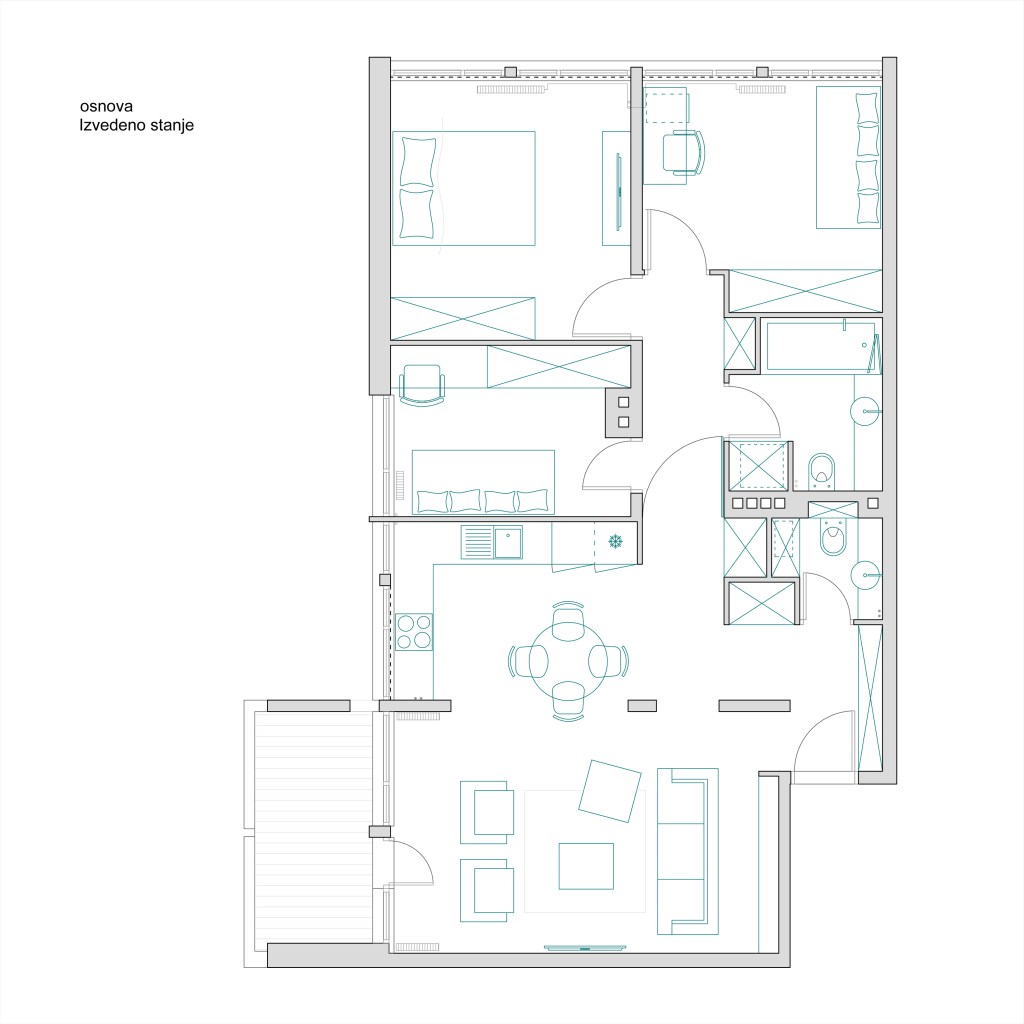
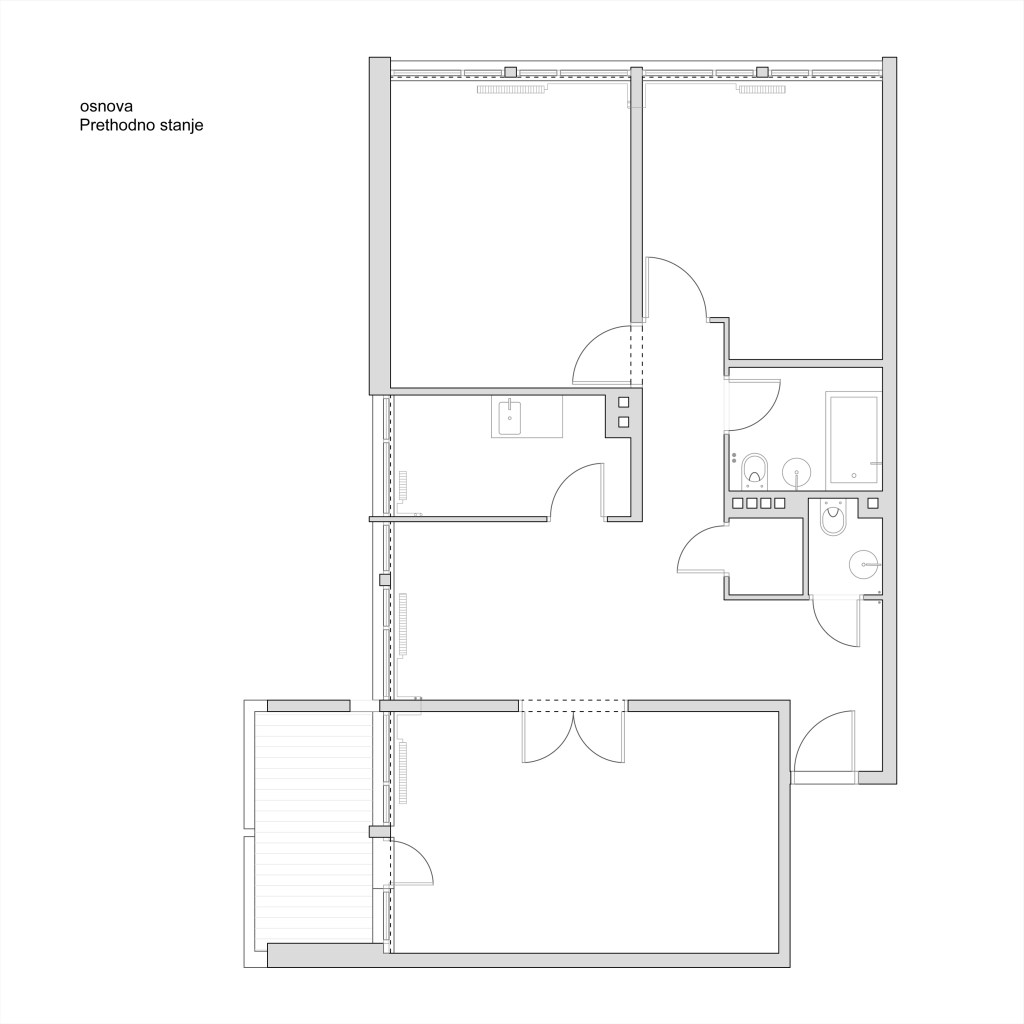
Before reconstruction, the apartment had two distinct elements:

  • A salon with a line of three rooms separated by classic double doors; there was an original parquet flooring; and
  • A separate bathroom and toilet, plus a large hallway that connected to the kitchen and pantry, with heavy walls and small roomsthat could not be functionally exploited; with different floor tiles, all at different levels.

The apartment’s original organization failed to separate these two elements. A heavy load-bearing wall prevented good visual contact between the two elements, and created a darker than necessary internal environment.

3. Description of the apartment’s reconstructed condition

Linking the two elements of the apartment was important for the owner, and it became a central feature of the refurbishment.

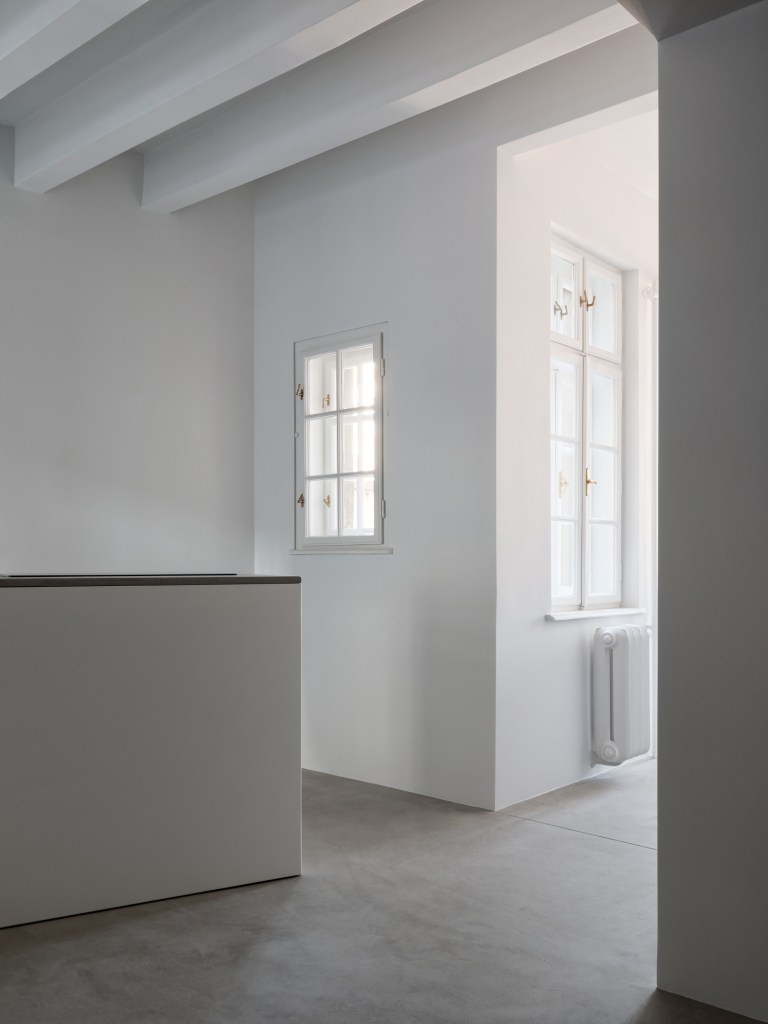
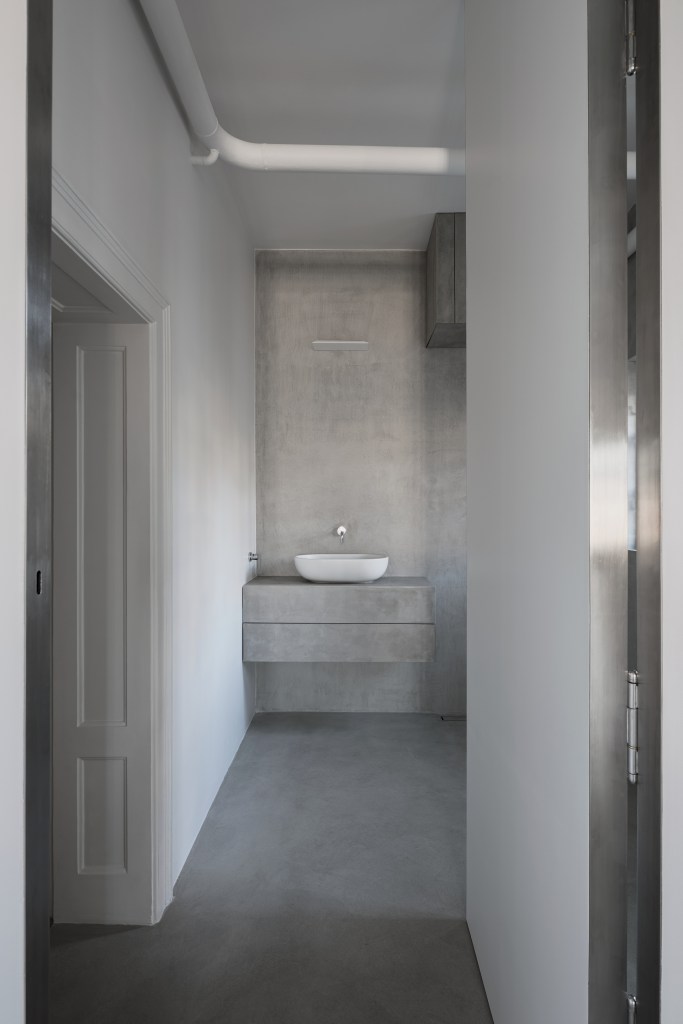
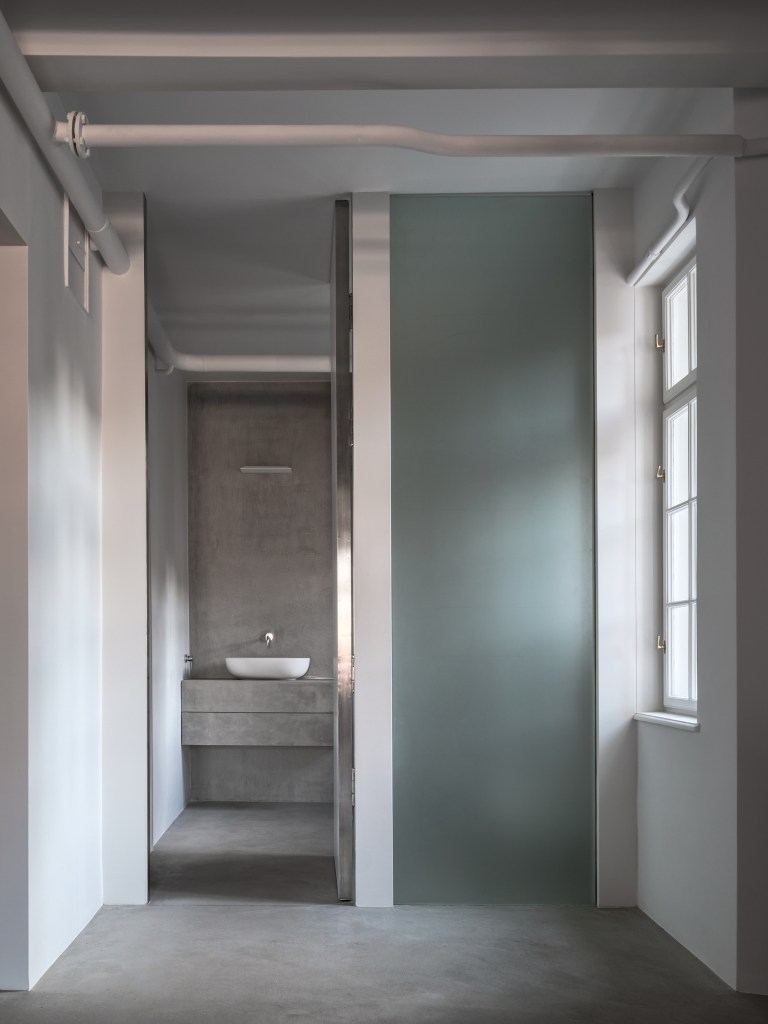
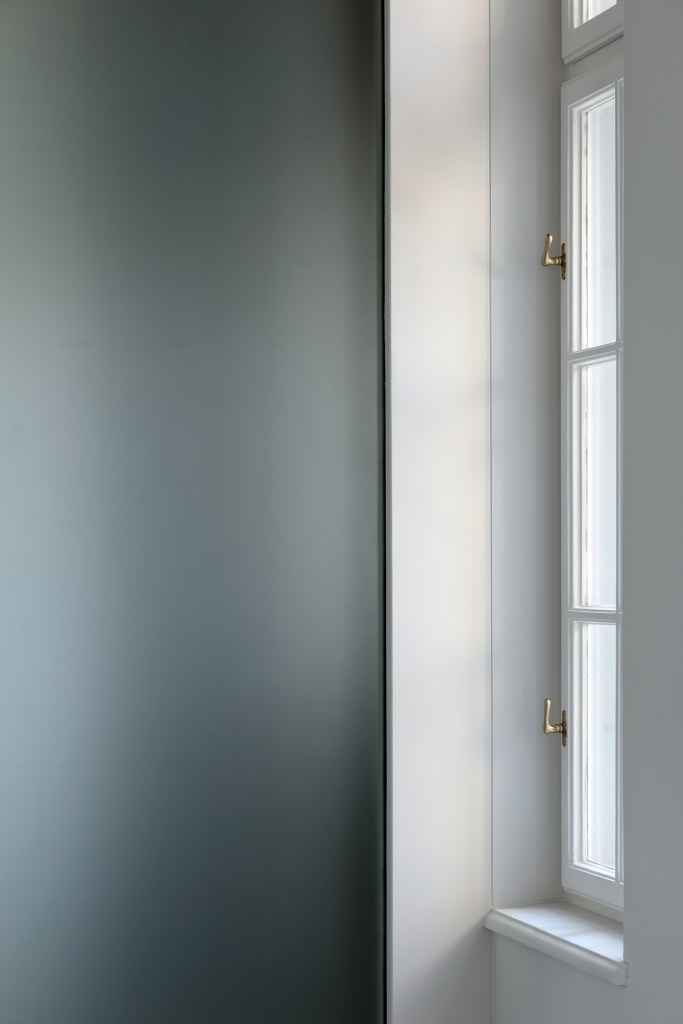
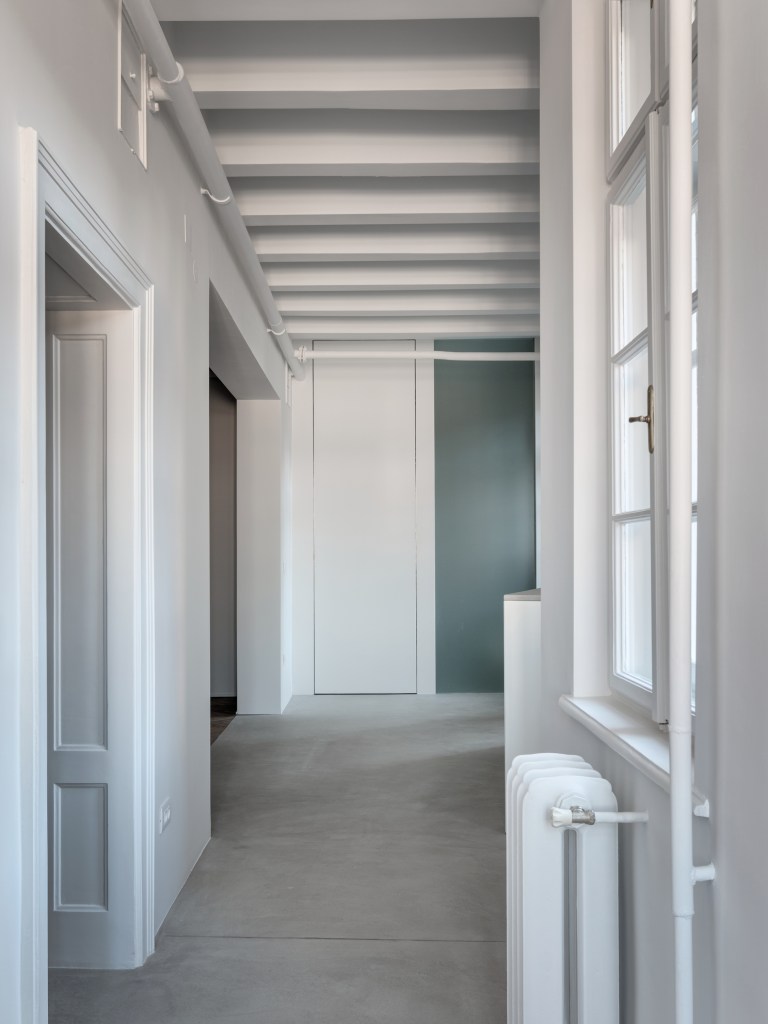
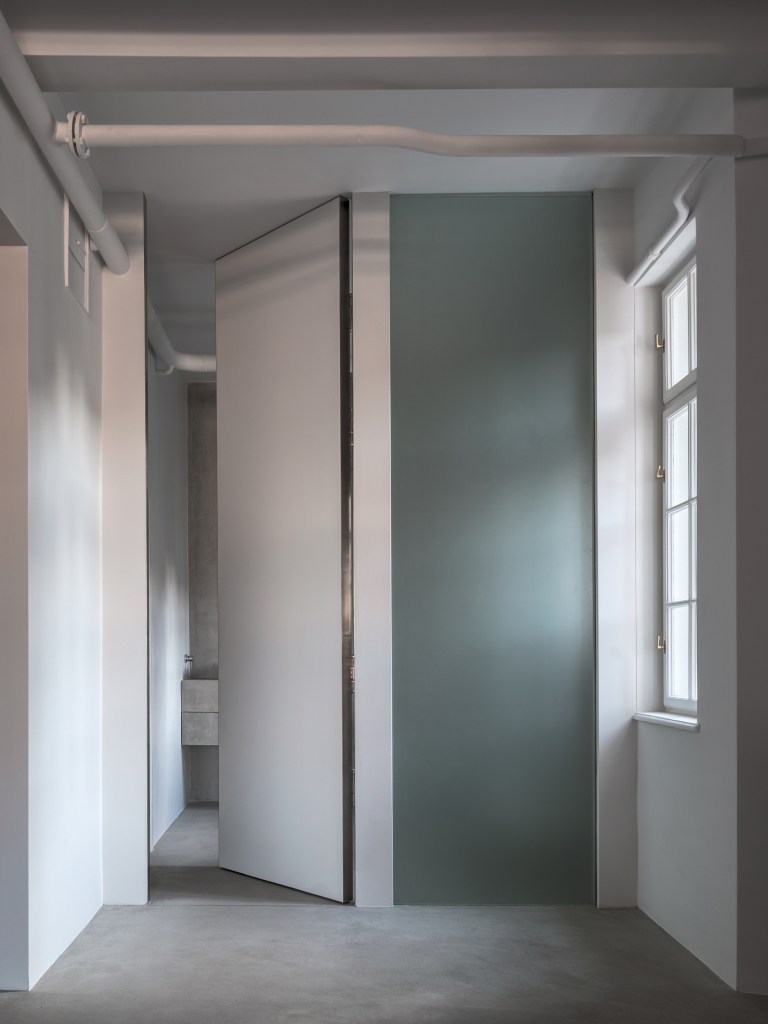
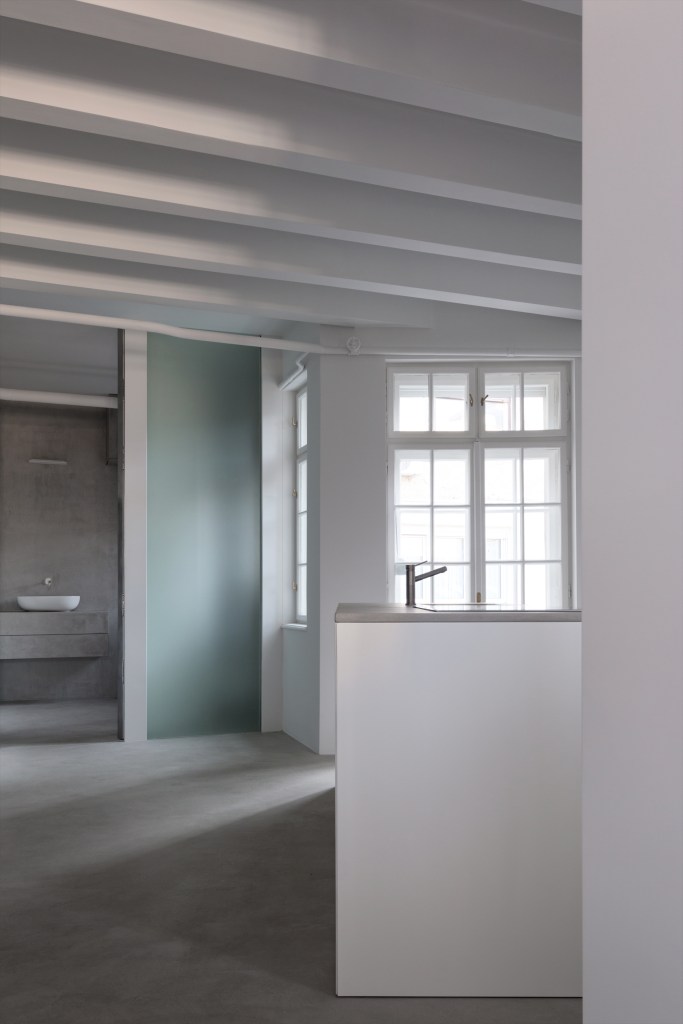
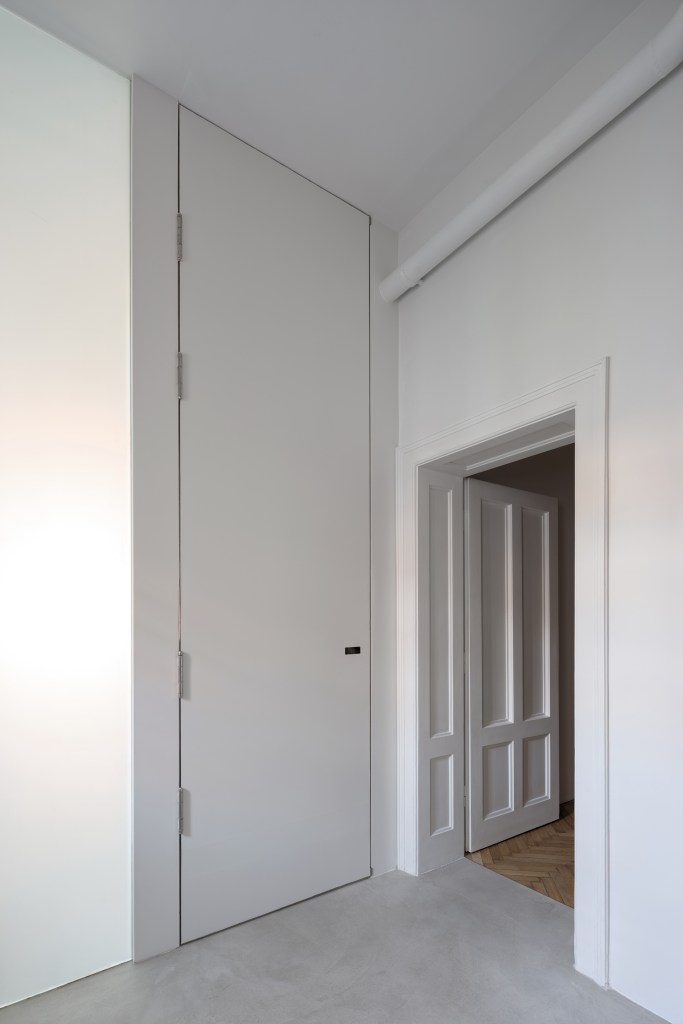
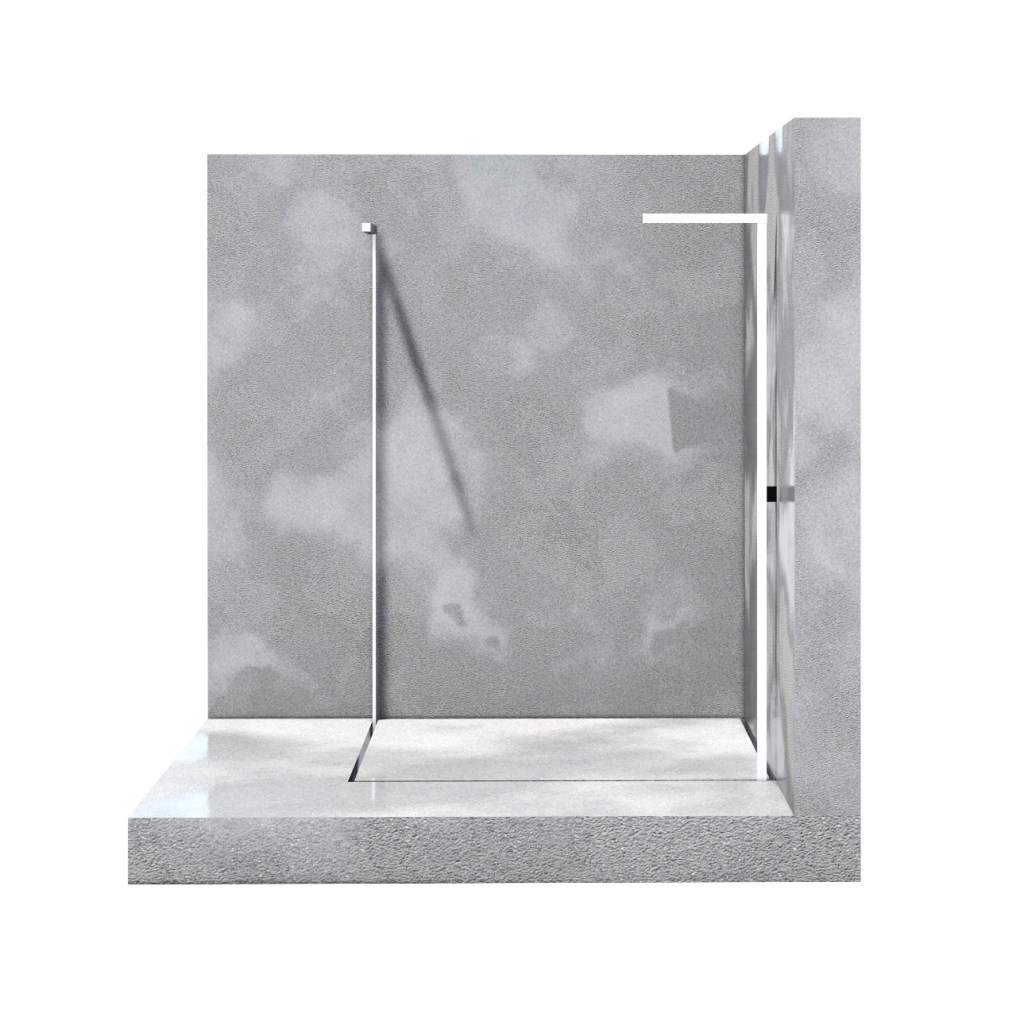
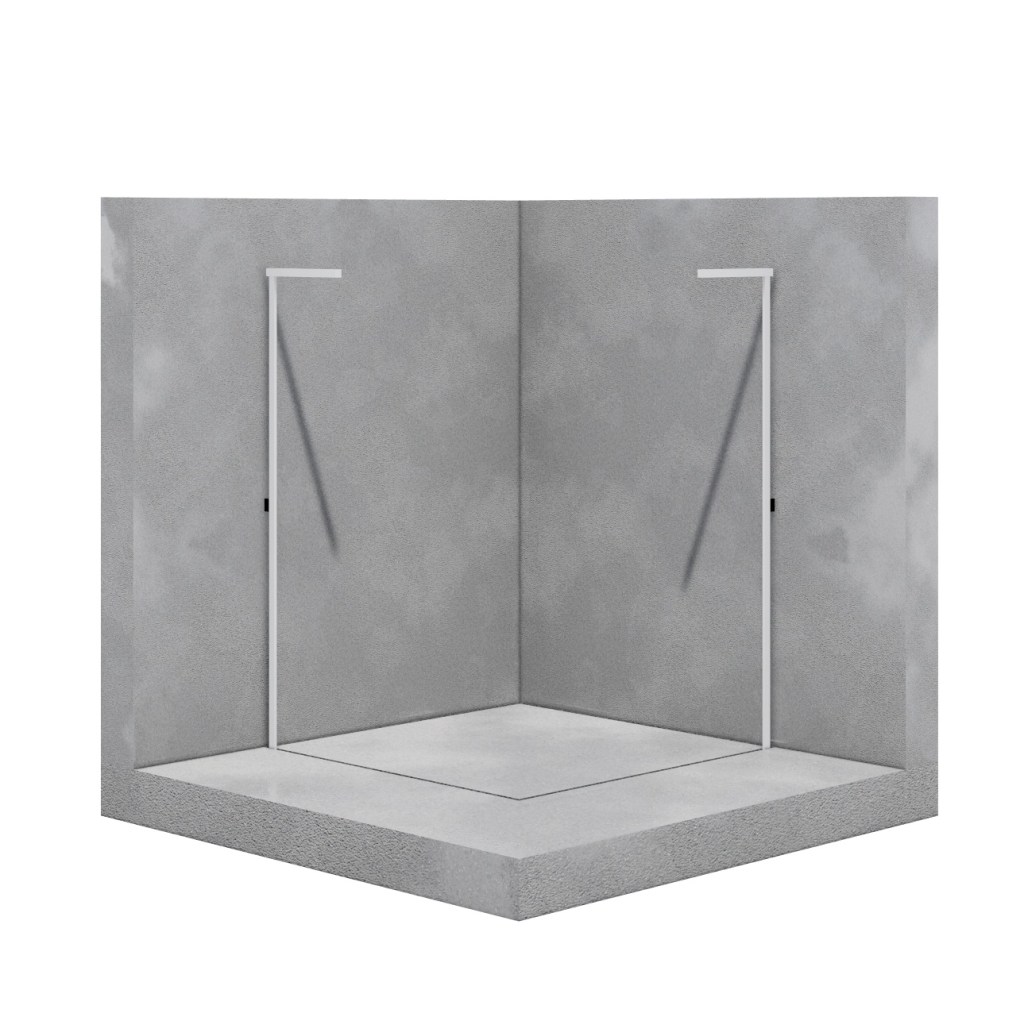
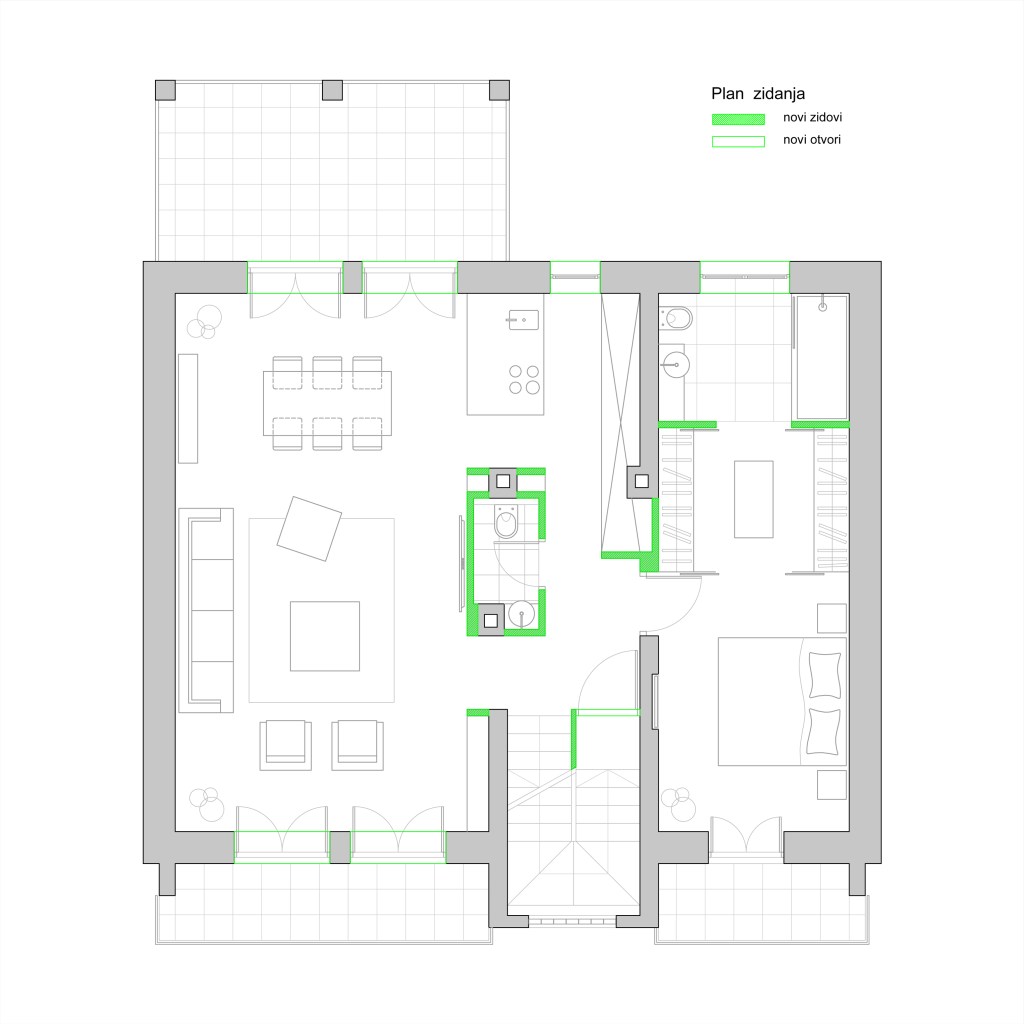
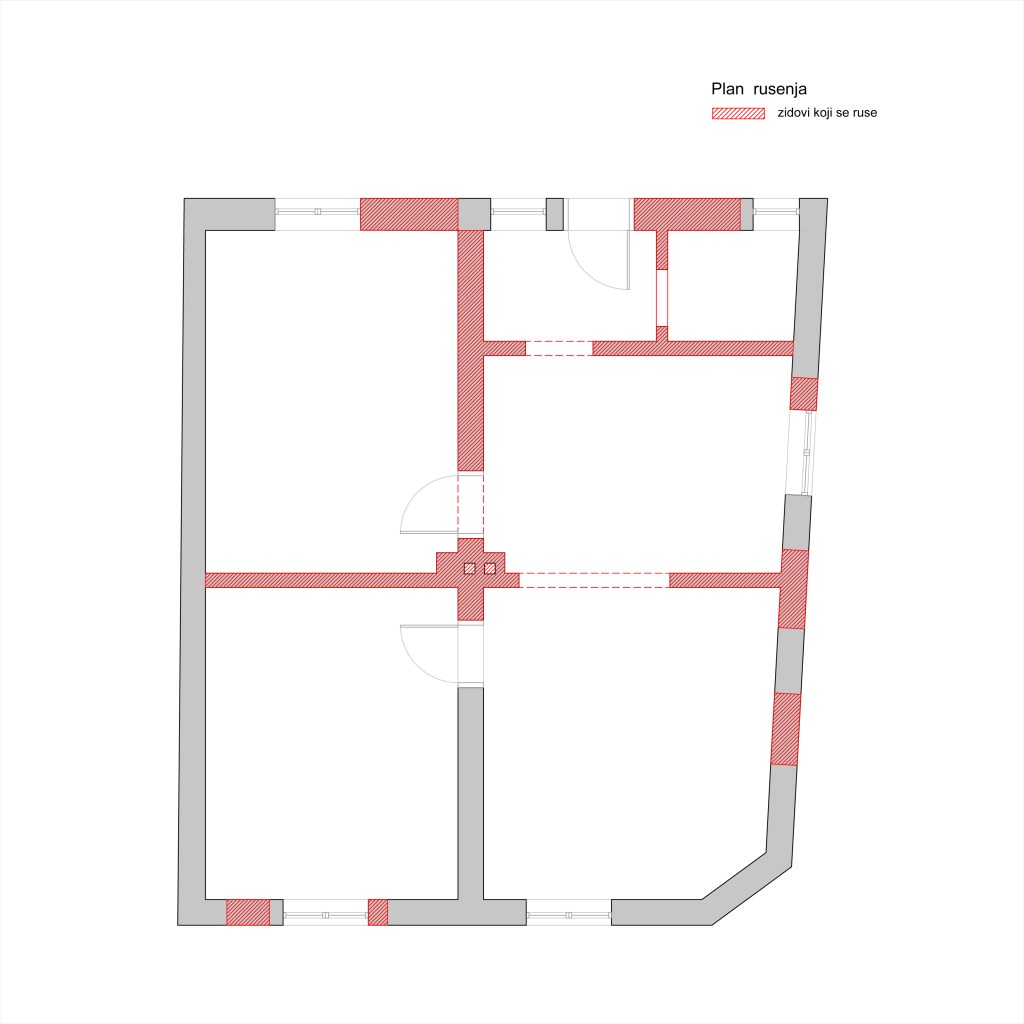
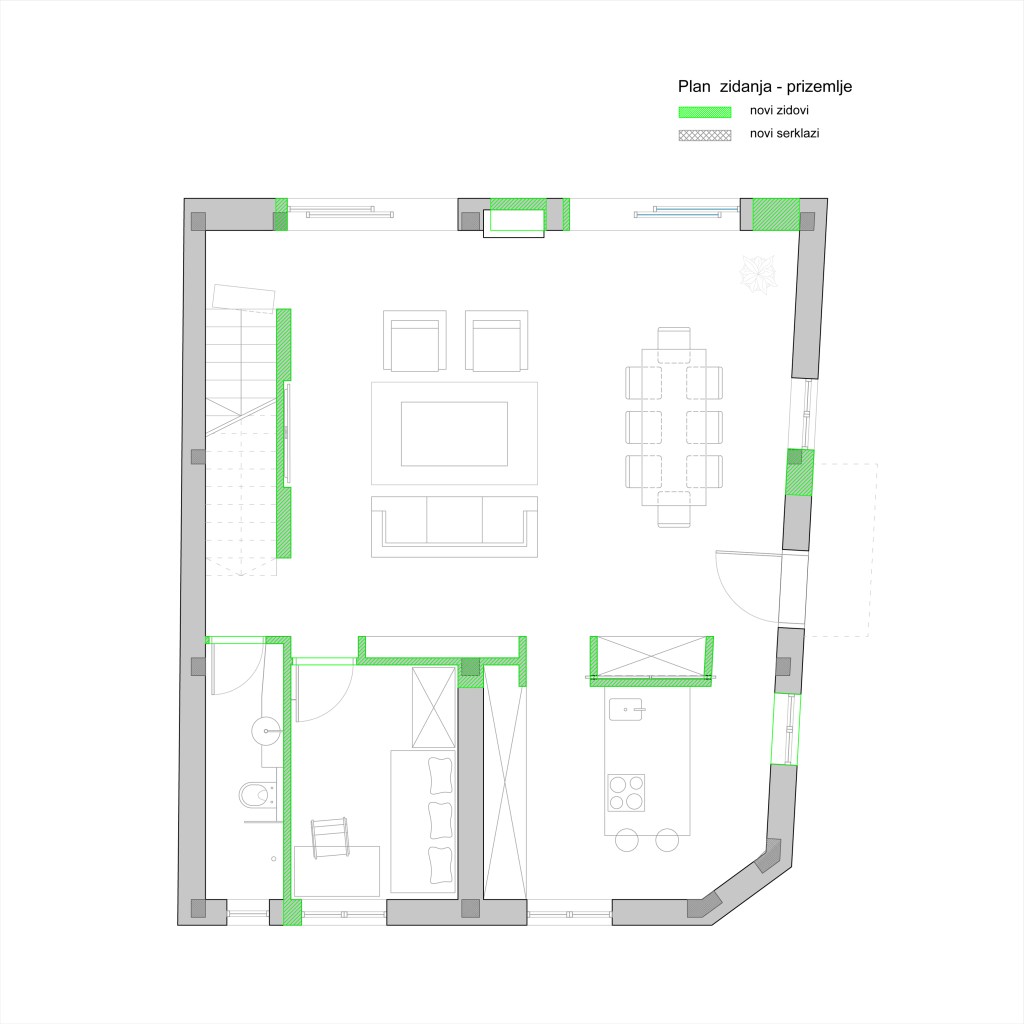
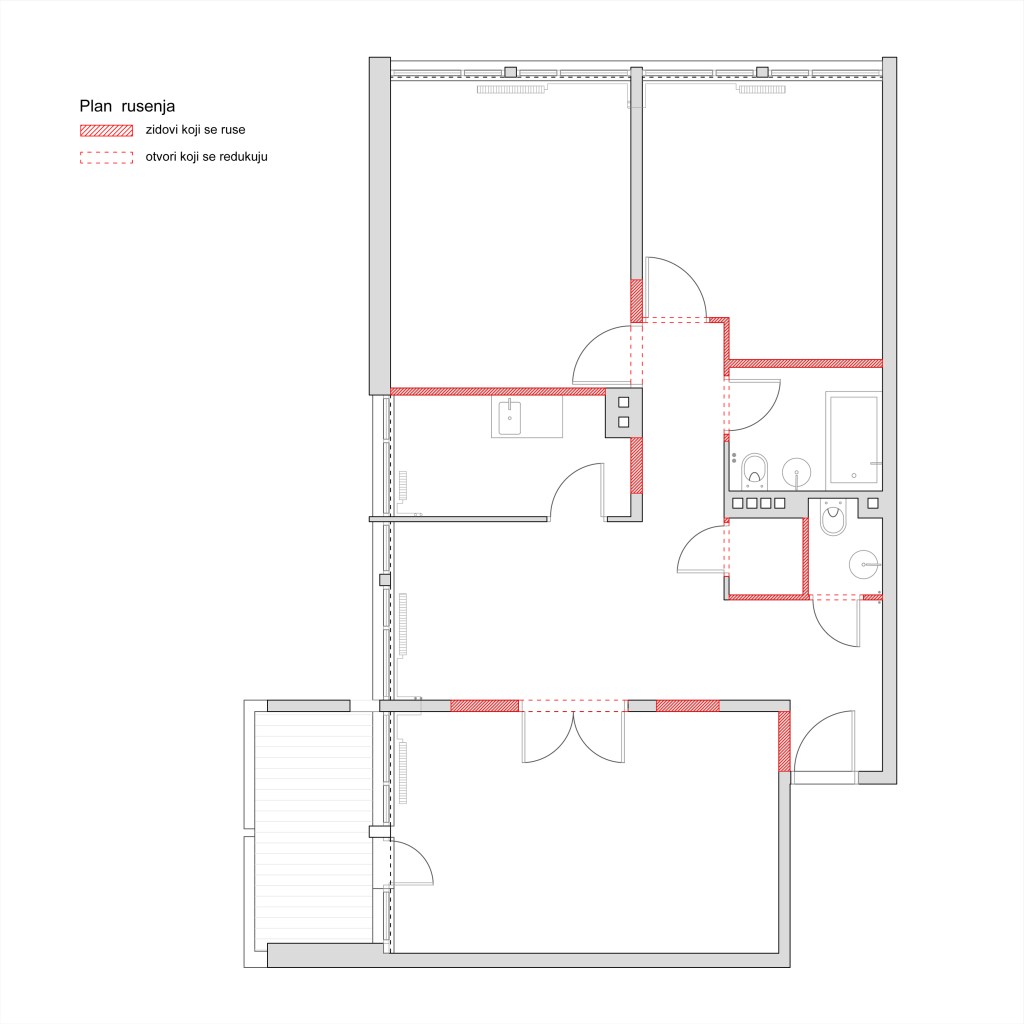
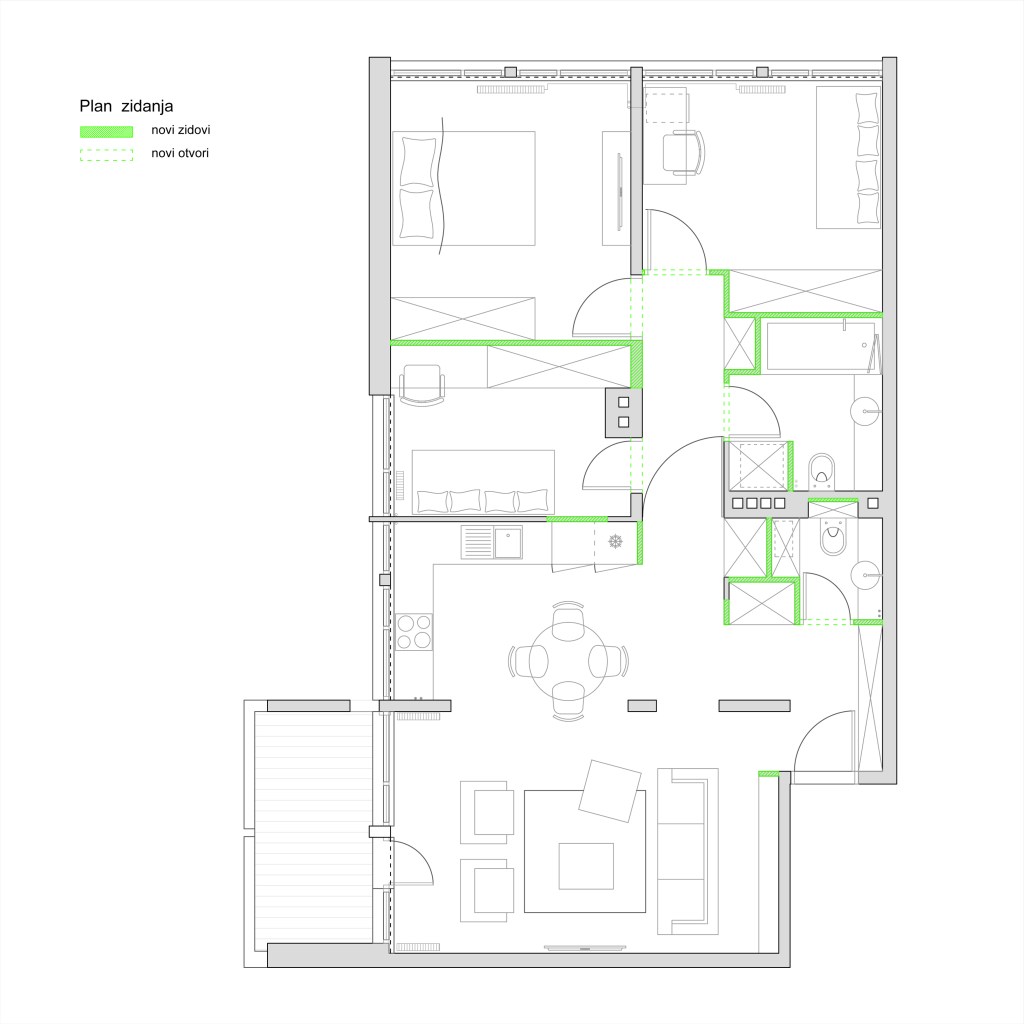
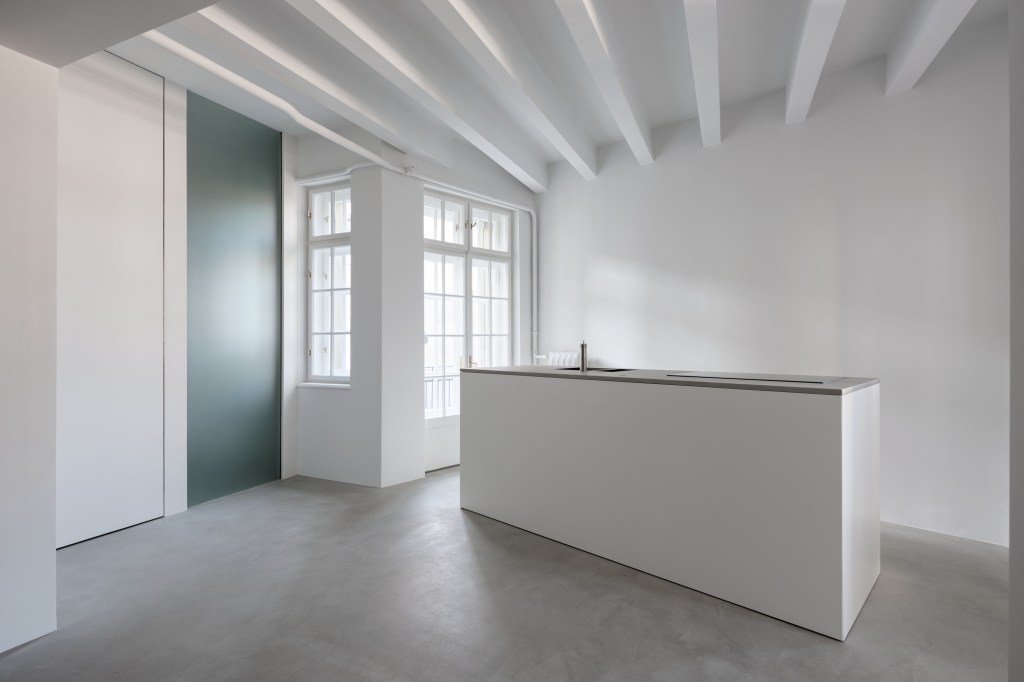
Recognizing all the flaws of the apartment, and taking into account historic value of the interior, wedecided that the focus of the intervention should be on the second element of the apartment, particularly demolishing the heavy walls. This raised the issue of how to separate the bathroom from the kitchen in the most minimal way. This led to the design and installation of a single door (moveable) and single panel of frosted glass (fixed), both 3.2 metres high. This facilitated general circulation in the apartment, as well as provided enhanced views, energy, light and shadow.

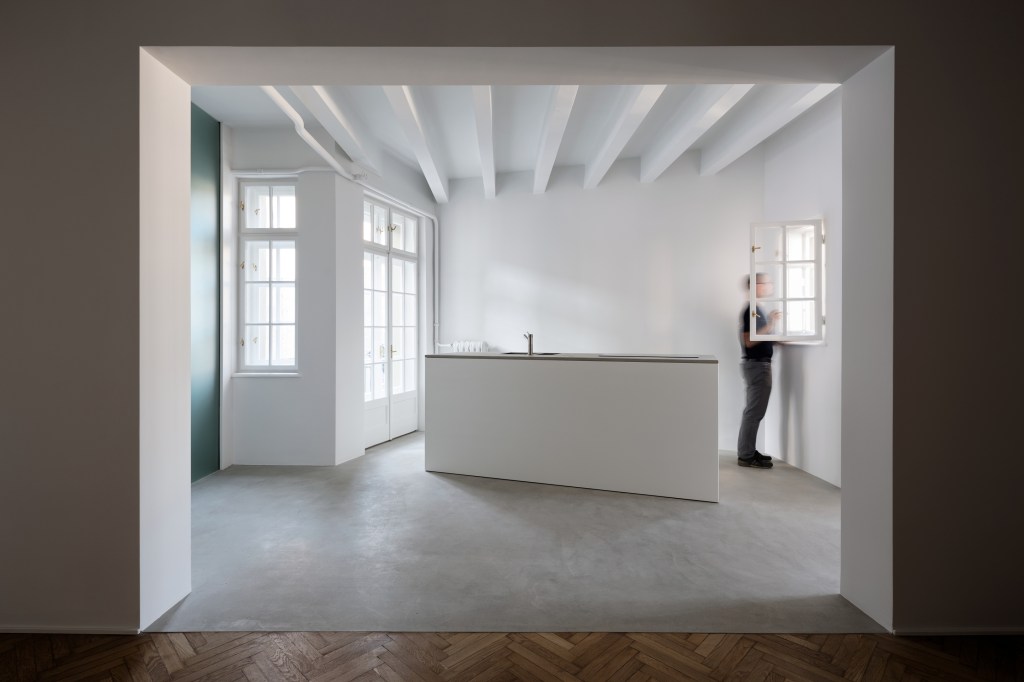
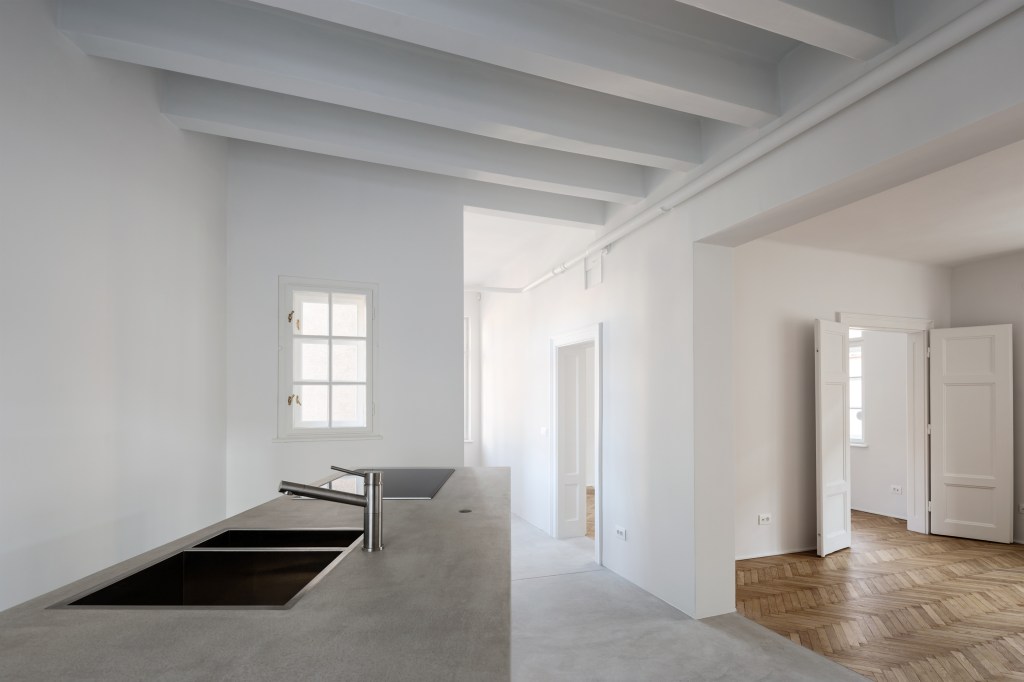
In the first phase of building work, most of the major load-bearing wall was demolished and reinforced with steel beams. This connected the two elements of the apartment, and increased the usable space. The apartment immediately became more airy, light and comfortable.

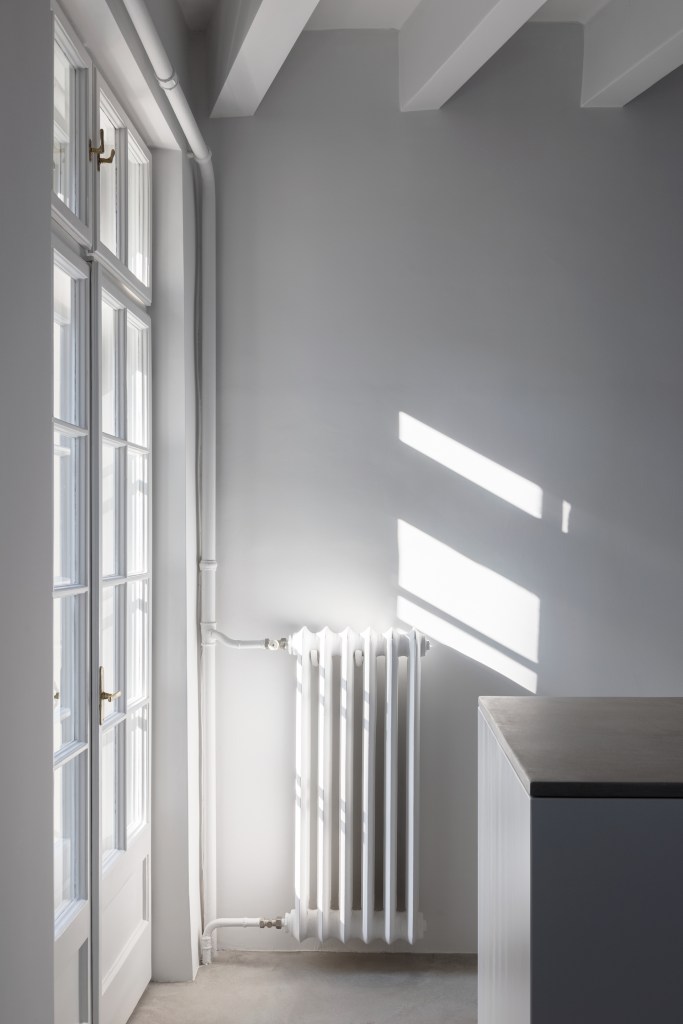
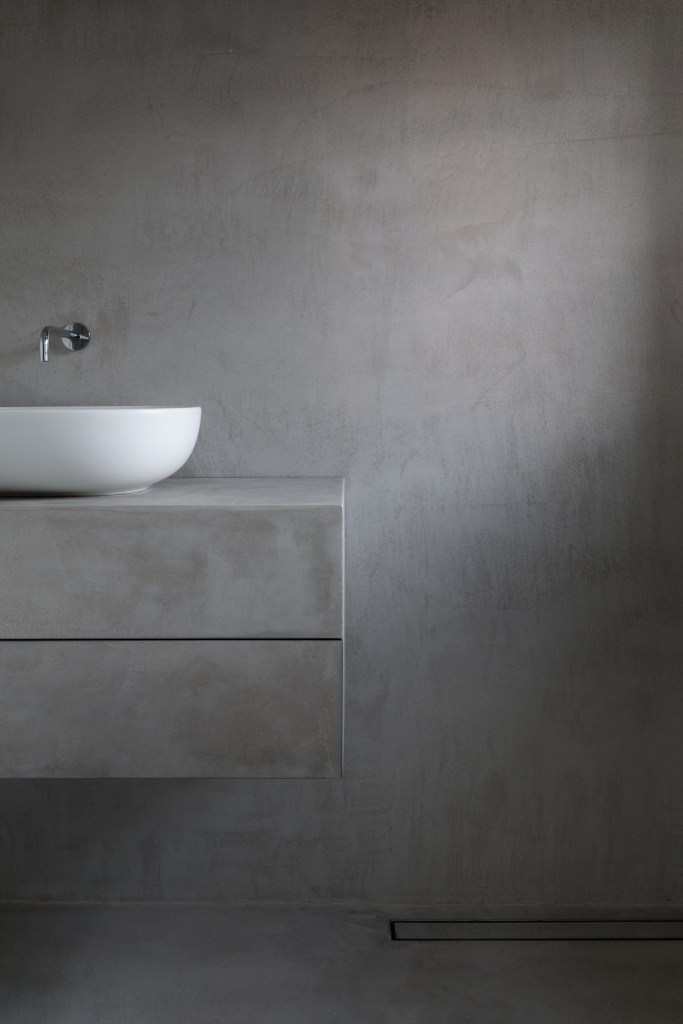
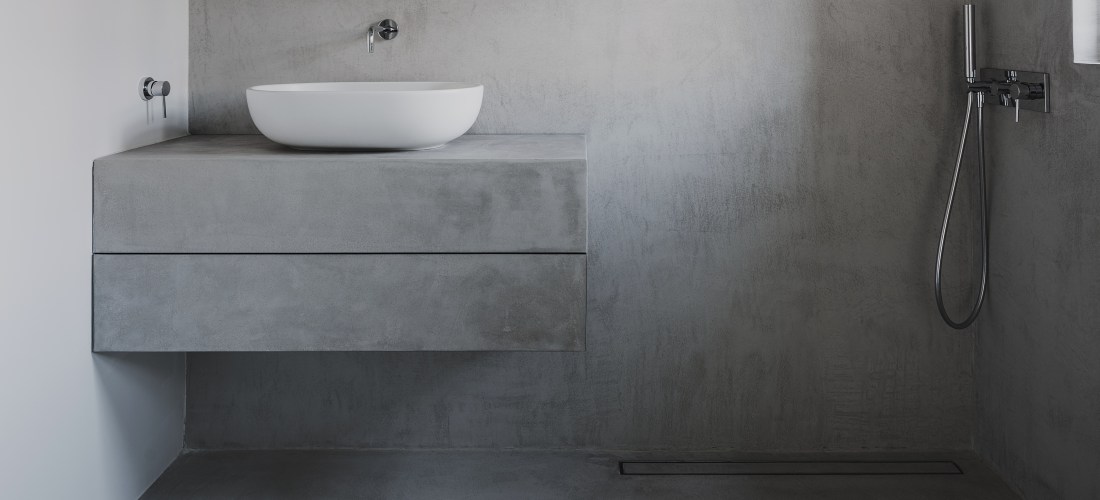
The floor material selected for use in the non-parquet section of the apartment was by produced by Microtopping. This has been used in the bathroom, the kitchen and the hallway. Further, it has been used on two of the bathroom walls and on the horizontal surface of the large kitchen island. This use of materials without joints has produced owner’s desire for artistic unity, simplicity and tranquility.

The previous false ceiling was completely removed, and the reinforced concrete slab cleaned, thereby raising the ceiling height. In the current space, the proportion of the windows can now be seen from a distance, something that did not exist before reconstruction of the apartment.

The beauty and clarity of the final design has minimised the need for furniture, allowing Ross’s essential requirement of space to be separated from non-essential clutter. The space breathes now in its visual openness, and its scale provides excellent acoustics for listening to some music.

Radio Television Vojvodina

architecture, built projects, interior

client:    Public media institution

“Radio – Television of Vojvodina”

architect:     Riste Dobrijević

chief technician:     Dragoljub Kujović

project: 2014 – 2016

completion year:    2020

gross built area:    17.523,00 m2

project location:    Novi Sad, Serbia

consultants:   Jovan Bačić – RTV

photographer:     Relja Ivanić

Concept

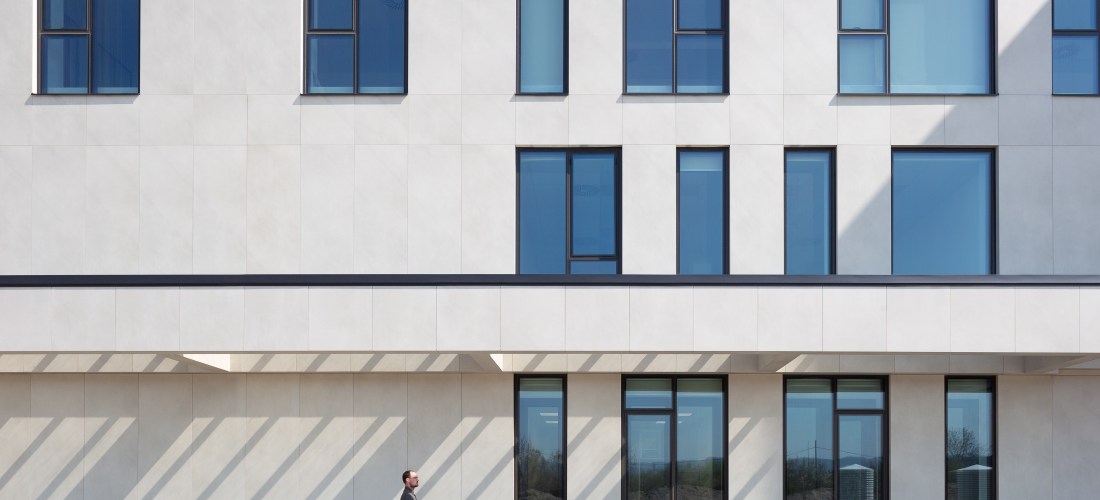
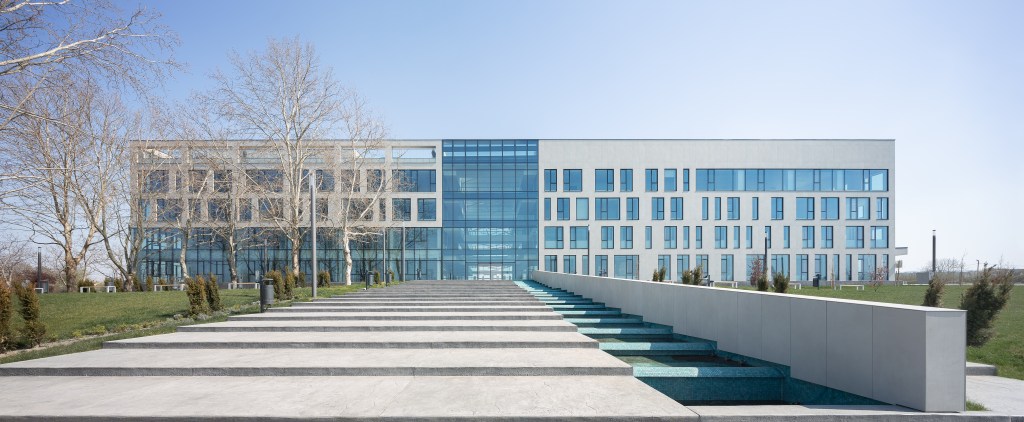
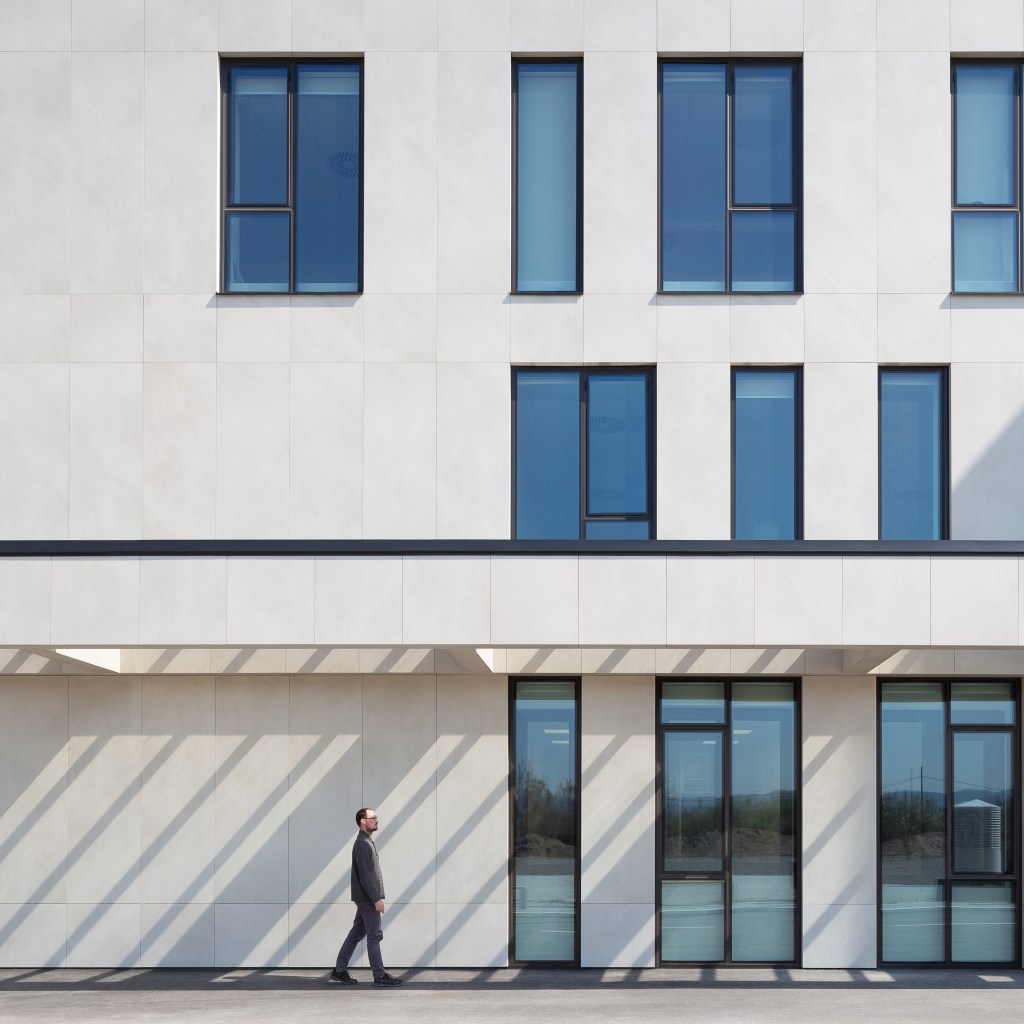
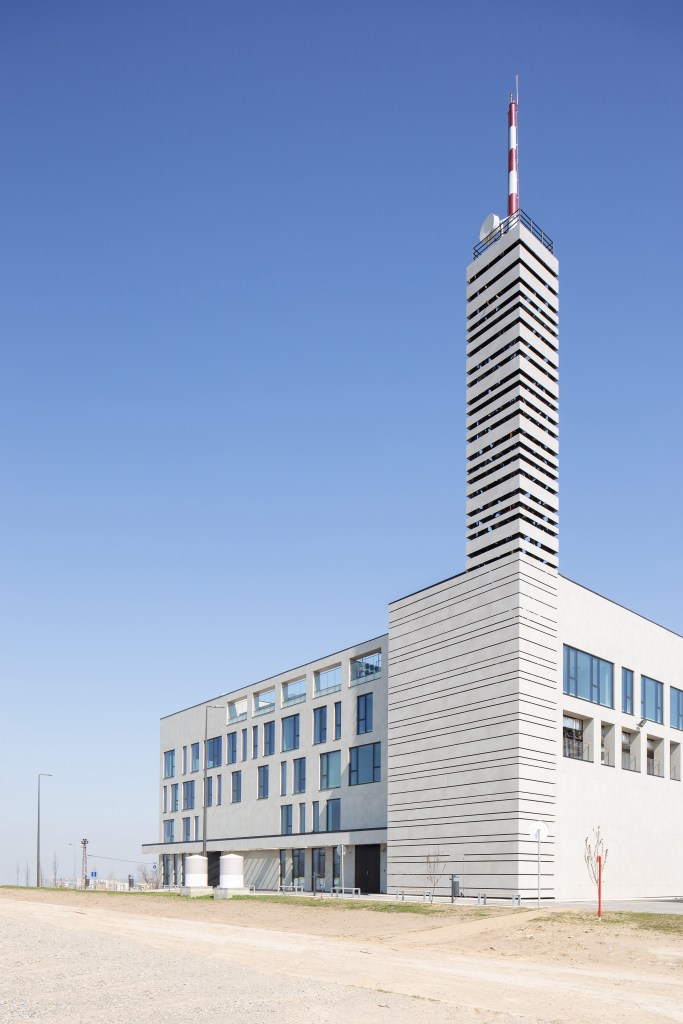
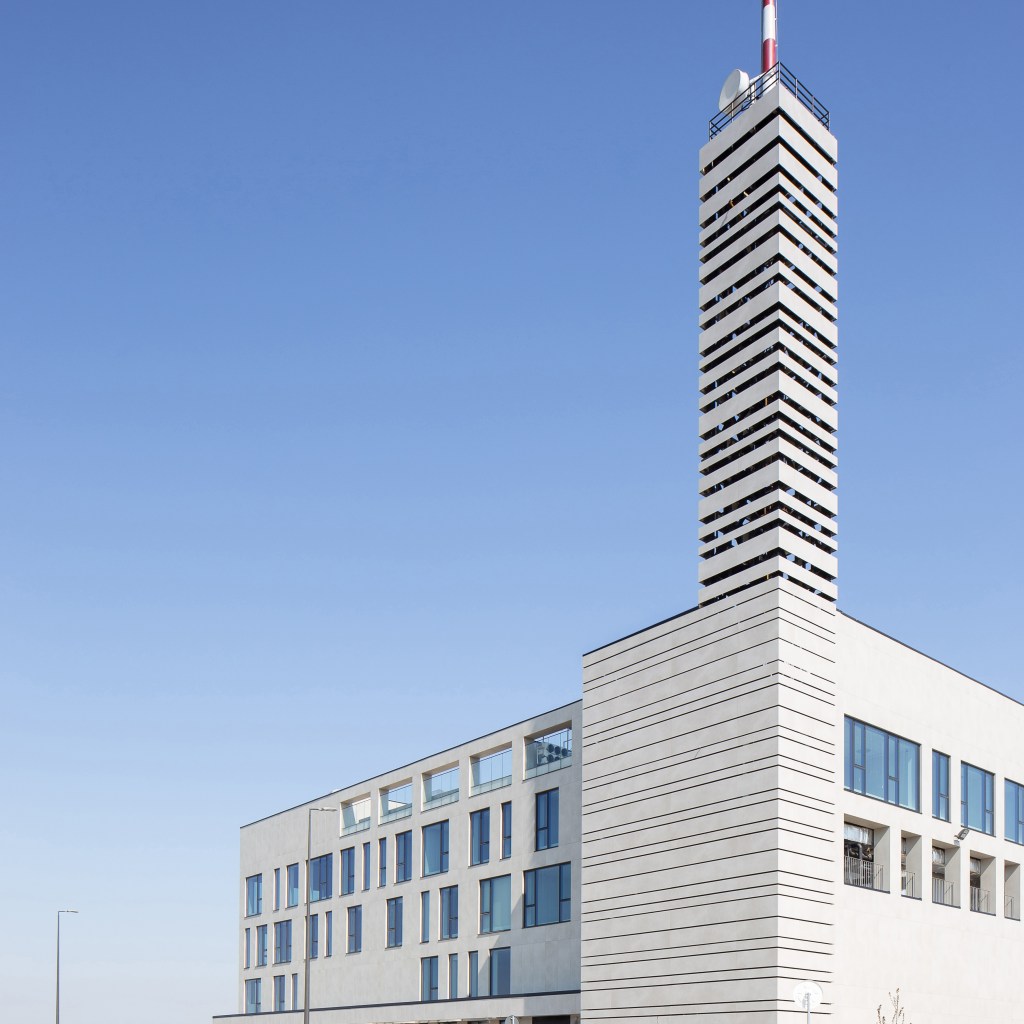
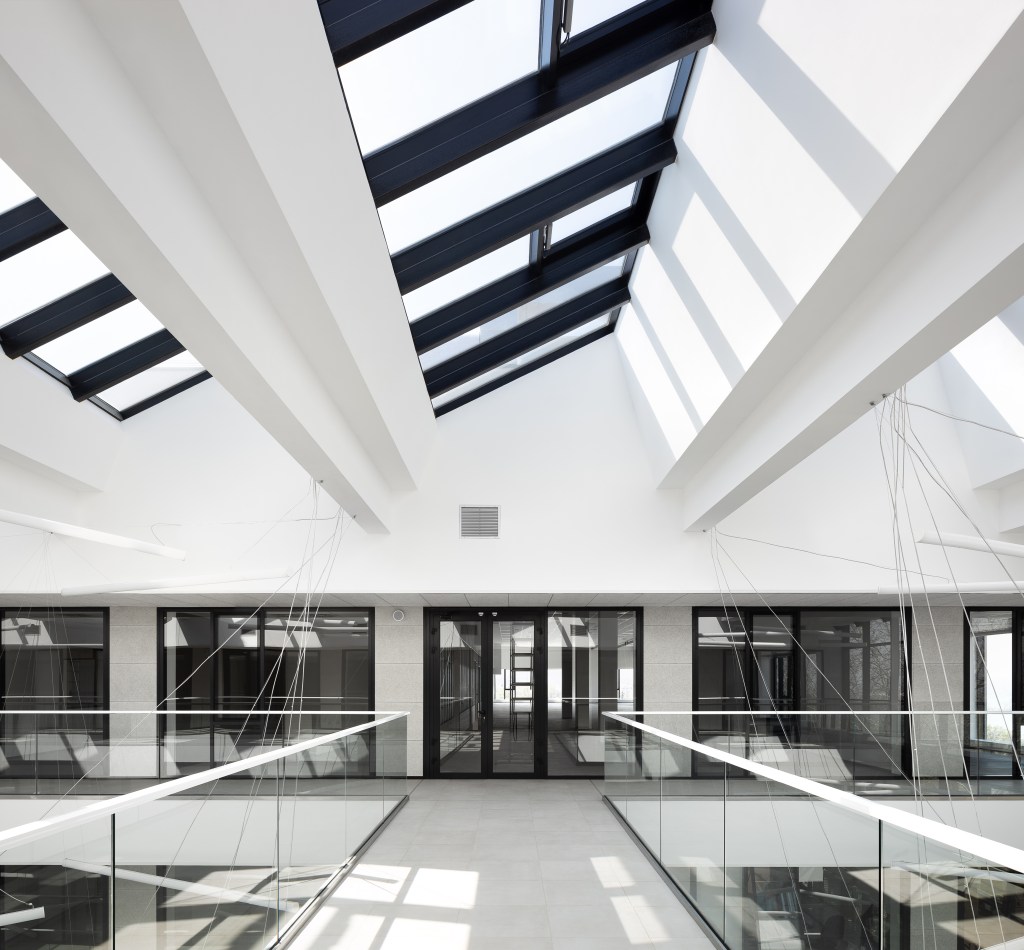
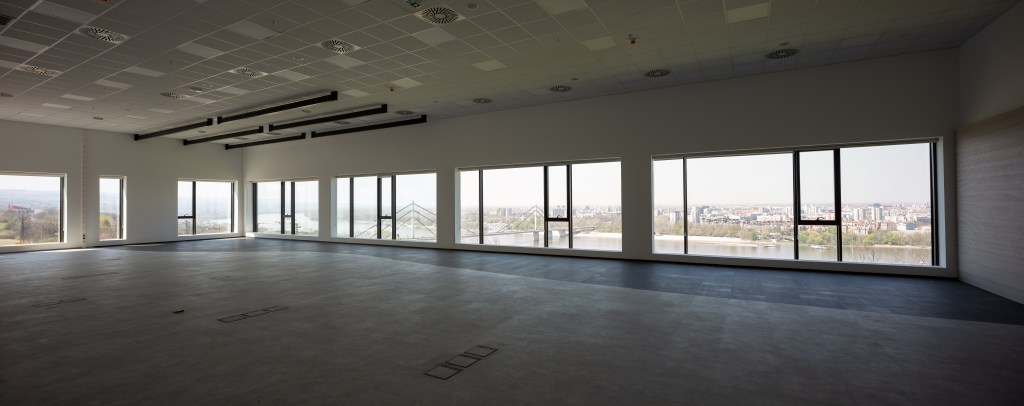
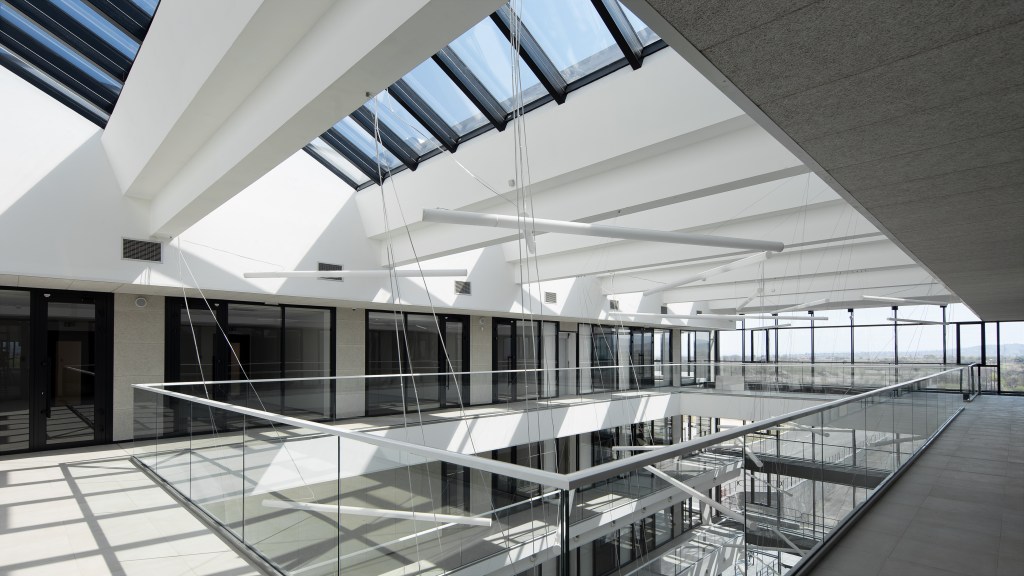
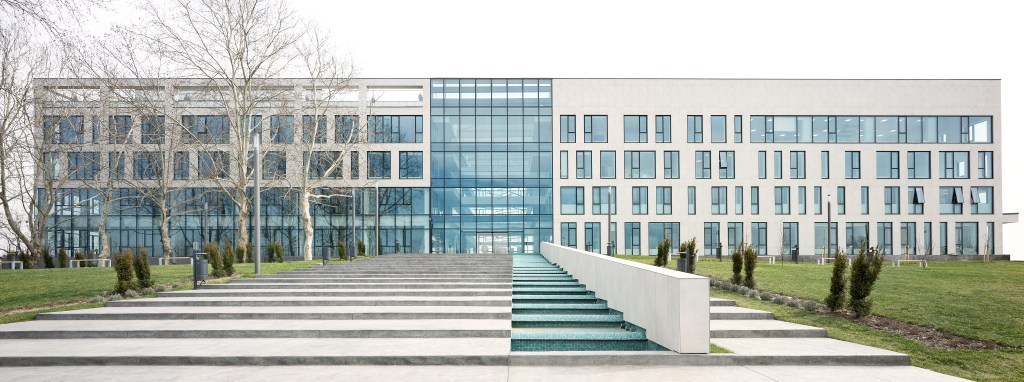
Radio Television of Vojvodina was constructed on the slopes of the mountain Fruška gora, on the cliff on a bank of the Danube, and in the immediate vicinity of the Sloboda bridge. Abandoned for twenty years, this public service building has emphasized horizontality, and, at 18 metres in length, it is hidden behind a canopy of plane trees. It stands a distance from the road in a large green belt. With a small footprint, the building sits both alone and lonely. In the vast expanse of Mišeluk, the building has a beautiful relationship with the sun, the sky and fresh air. At an altitude of 140 metres above sea level, the site offers a fine view of the whole of Novi Sad.

The basis for the building’s development was (a) being awarded in 2014 first prize in the competition for the conceptual architectural-urban design of the new building, and then (b) starting the process of reviving its two functional cubes.

The pure geometric form of the cubes proved to be the best model for defining dimensional membranes. This reduced smaller or larger functions in mutually drastic height differences to a relationship that mostly aspired to its spatial minimum and thus optimum.

This led to the social aspect that defined in the building’s interior and exterior function, leading to a structure without any lost space in which both the installations and Man touch the sky on its fifth facade in accordance with the spatial needs of both.

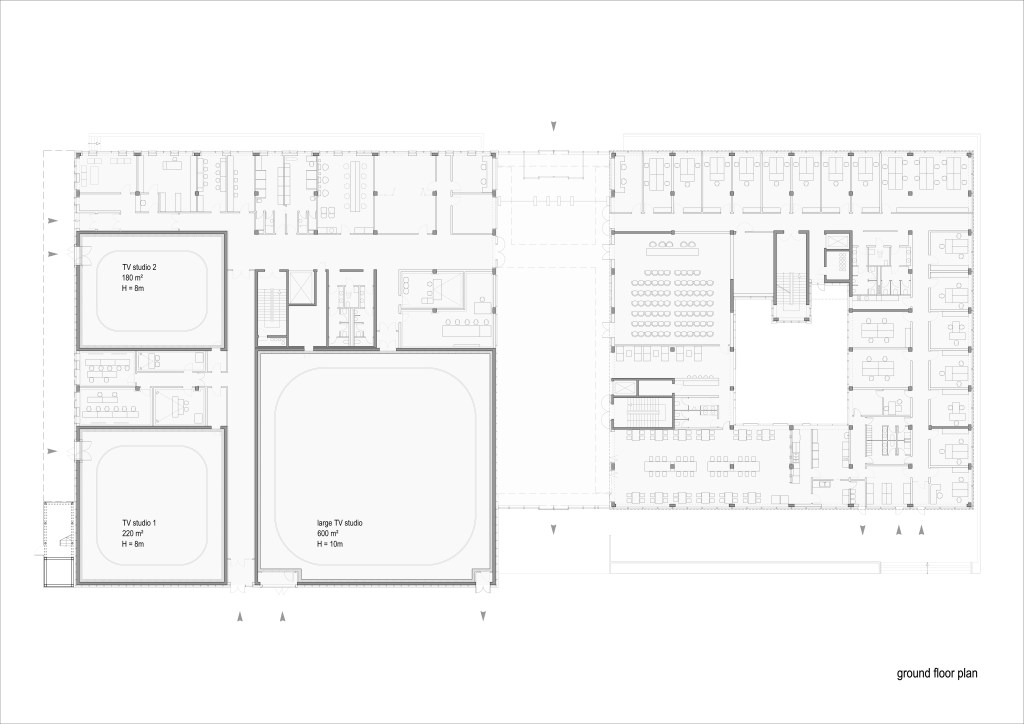
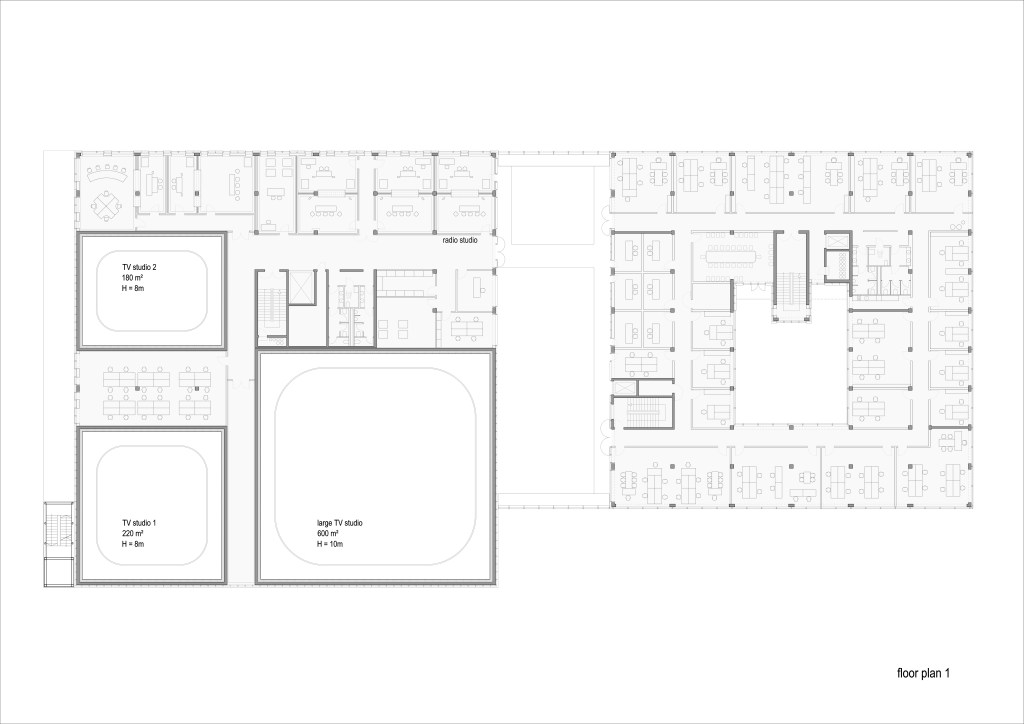
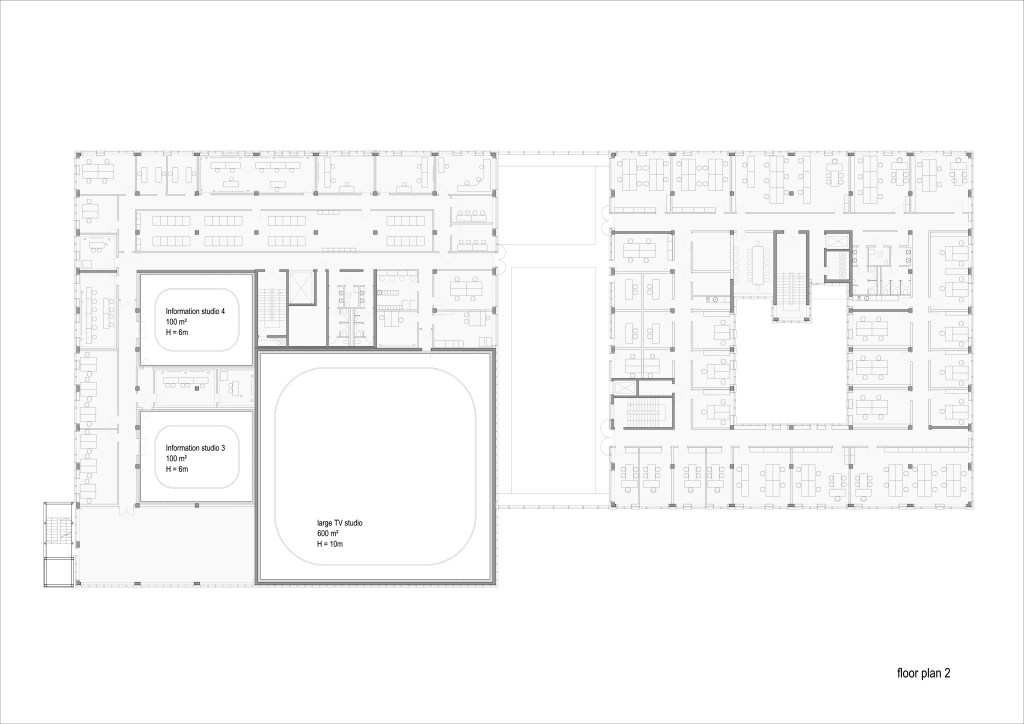
The smaller cube is administrative, as spatially expected of an office. The larger cube is different in everything. It is full of smaller wholes that are cubically different and whose relations transition from one void to another. These gaps define the interior volume close to humans that acts to create sound, movement, scenography, play and images.

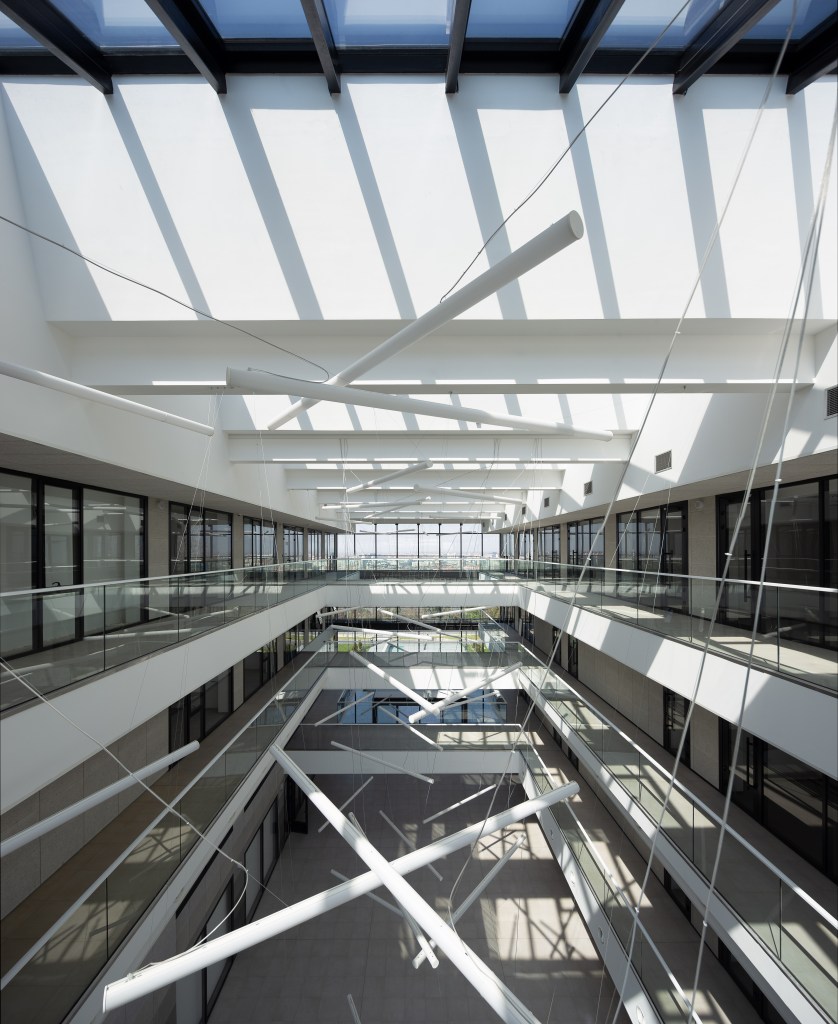
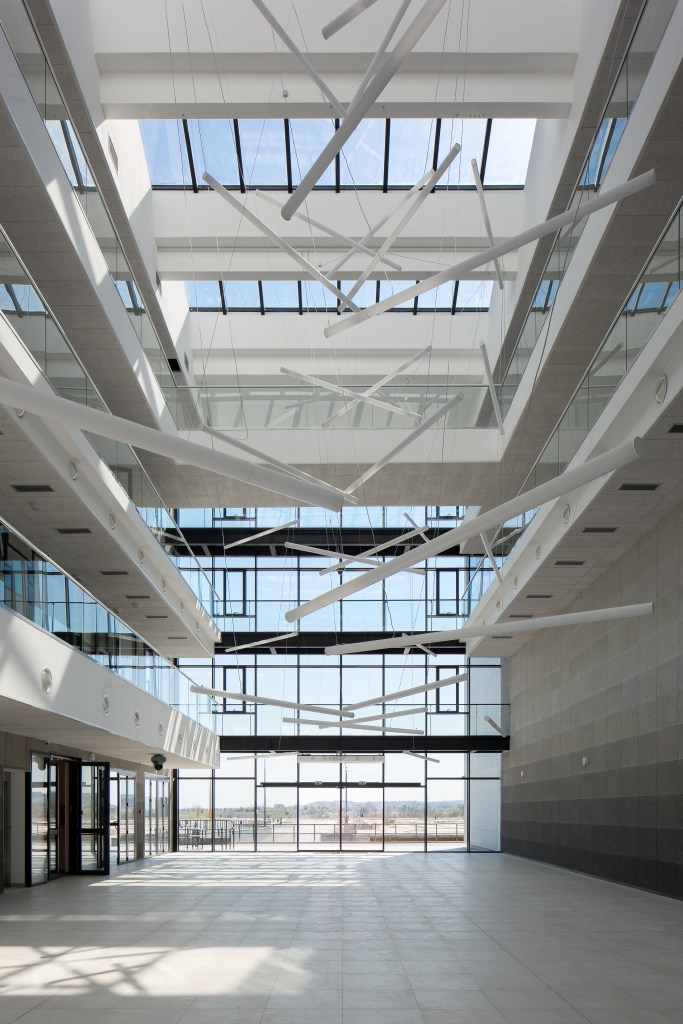
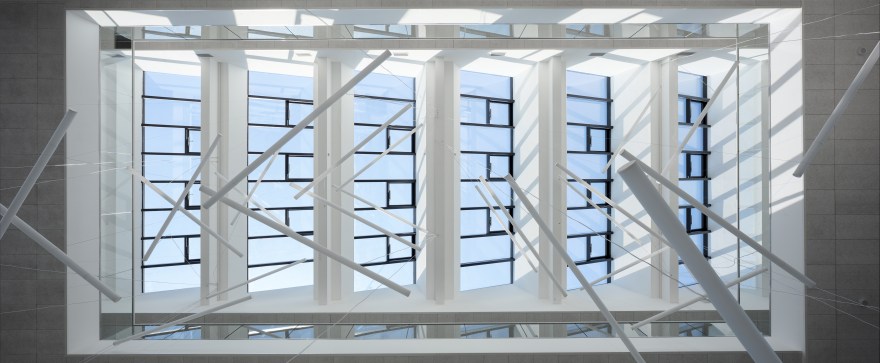
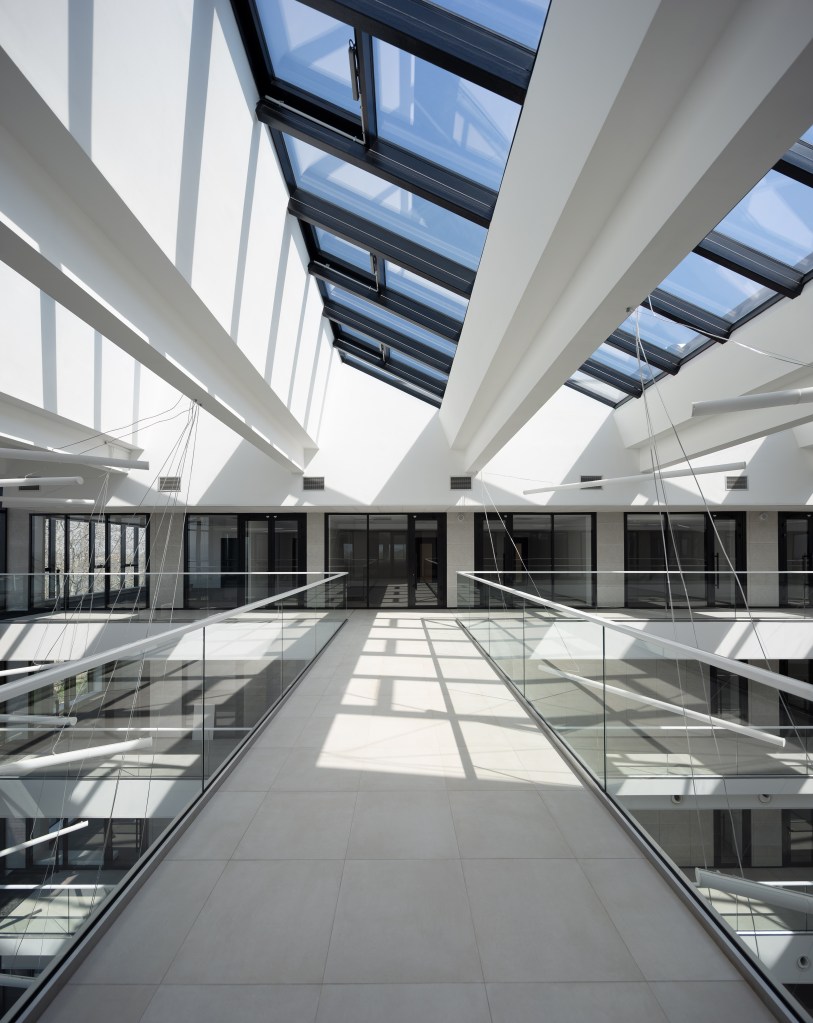
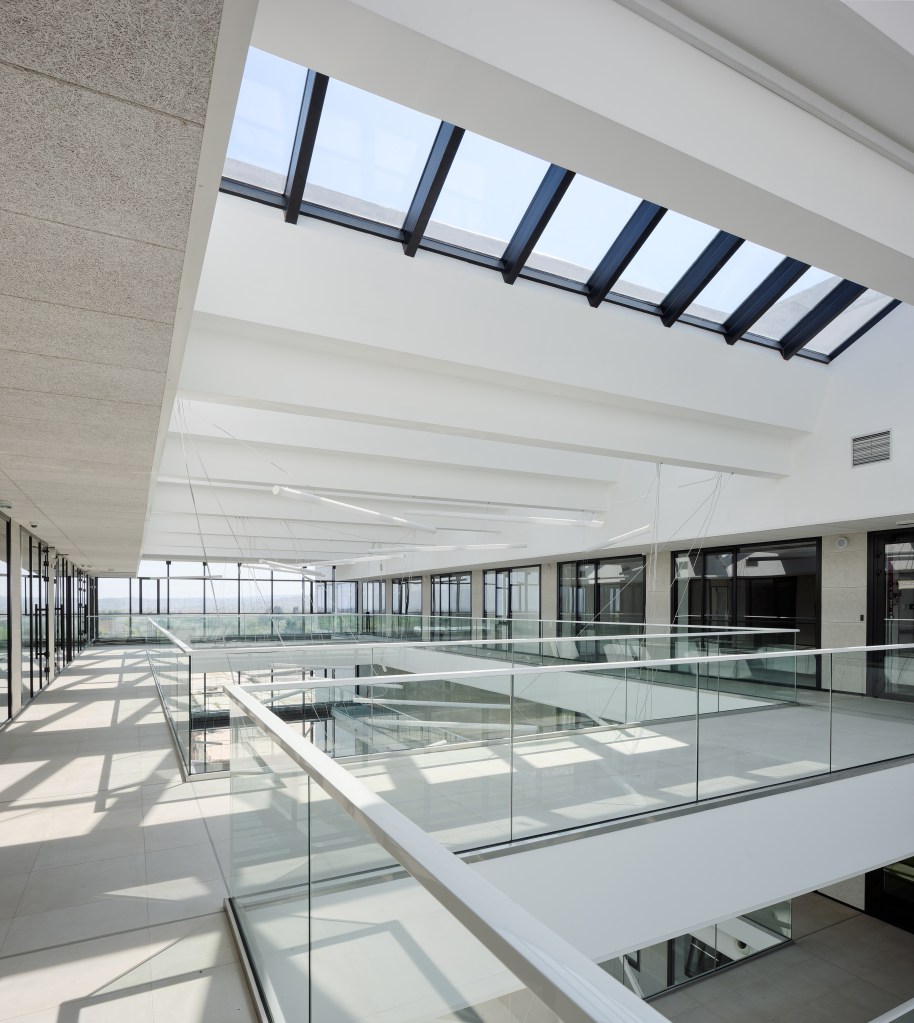
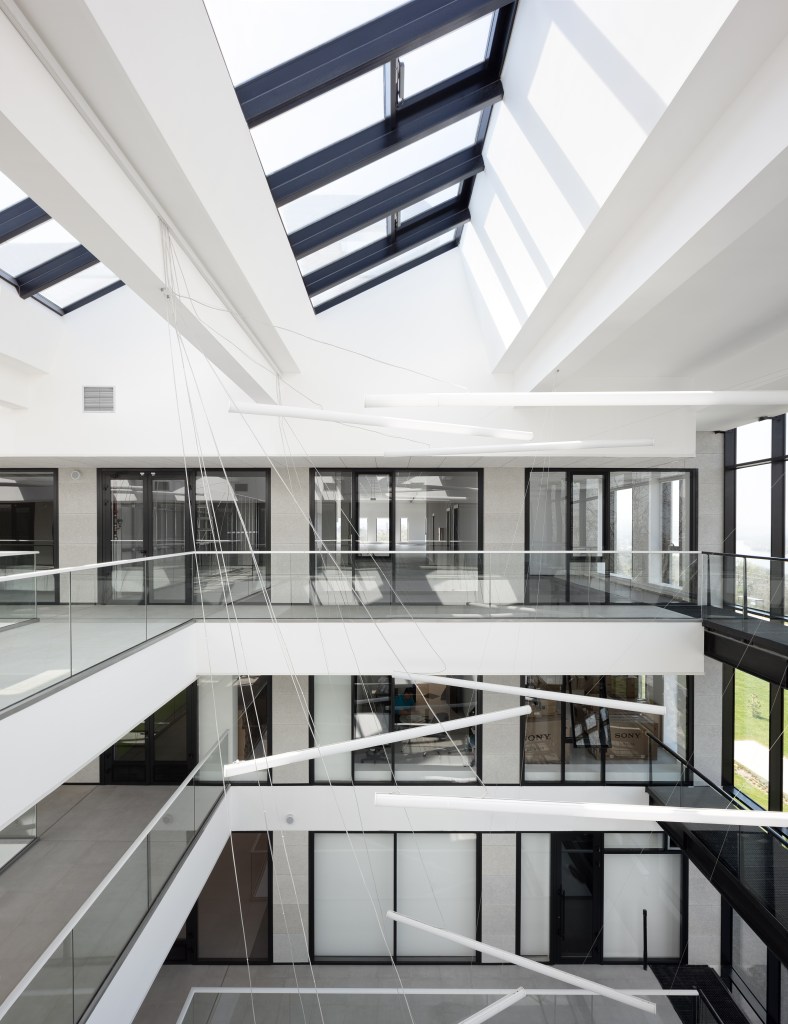
The gaps are connected by a central covered atrium with which they create a whole. Every journalist, creative person and engineer has a workspace, which, with the help of a smaller open atrium, has allowed external light to penetrate an honest building of fine proportions that reaches each and every employee.

Numerical parameters:

– Occupancy on the plot: 20%

– Roof height: 18m

– Area under the building

(gross ground floor): 4.050,00 m2

– Gross building area (all floors): 17.523,00 m2

Functional parameters:

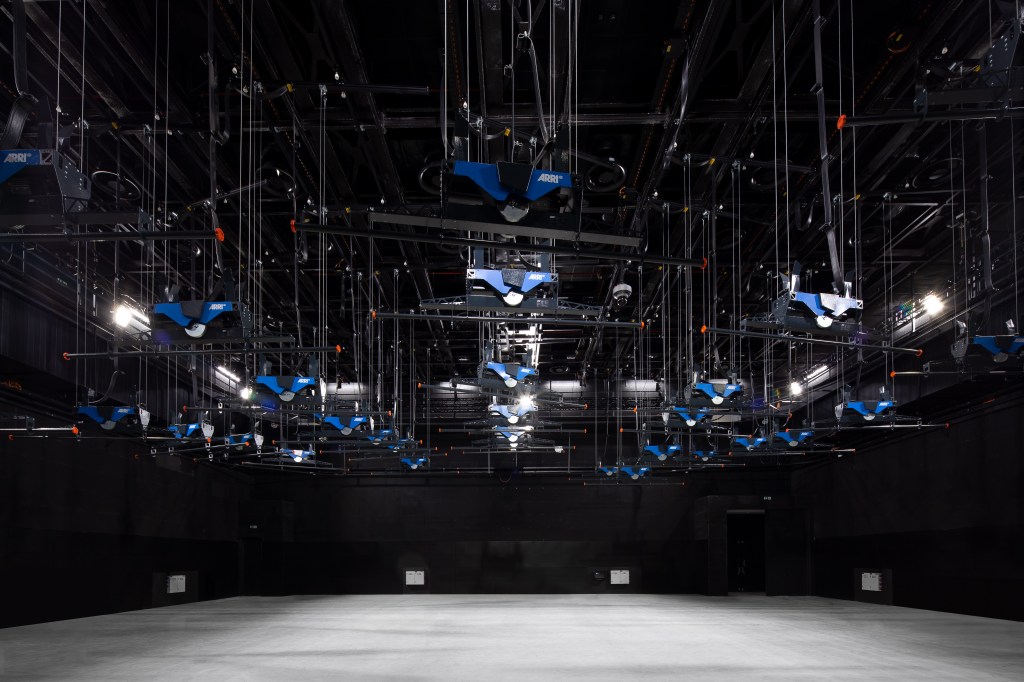
Approximately 1,500 employees are involved in creating radio and television programmes in 12 languages. This influenced the creation of various small spaces requiring peace and quiet with a separate acoustic enclosure. There are 5 television studios of different dimensions from ​​600 m2 to 100 m2 which vary in height from 5.5 to 12 metres, each studio having its own audio and video facilities. The central atrium functions as an additional sixth TV studio in addition to providing primary functions of light and internal communications.
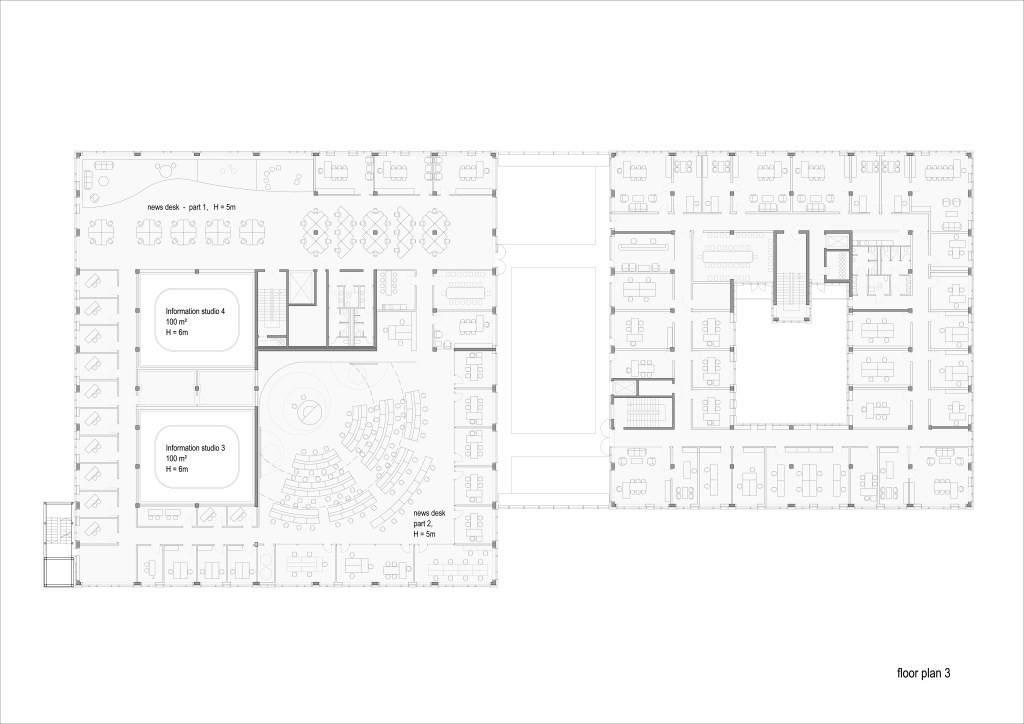
The radio programme will use 7 radio studios of which that for music (in the basement) is the largest at 180 m2 and 6 metres in height. Other radio facilities include one drama studio with a deaf room, 3 show studios with their own directors, one youth studio, and one multi-functional studio.

The immediate vicinity of the building’s source of energy, on the second floor of the production cube, houses both the technical engineers and management. Journalists work on the third floor within two open-plan offices. Two News desks are each located in 500 m2, with each one hosting 70 news programmes with separate editorial and editing suites. Administration offices, legal services with editorial premises for each national minority, meeting rooms, a restaurant and a cafe, a media centre and accompanying facilities have been housed in another functional cube designed to maximise the efficient use of available working space.
project team:   R. Dobrijevic, D. Kujovic, 

Proing – M. Milin Krunic,  

Eurogardi – Z.C.Floric, M. Vlaov Tesic, N. Djakovic,

J. Zelenovic, V.Floric, M. Zoric, M. Djordjevic,

S. Radosavljevic, Nmartin, Arhipro, M. Stojcevic,

Z. Sandic, S. Vlajkovic, D. Banjanin 

engineering:   Dj. Pavkov, D. Rajak, J. Okuka, B. Cesljevic, M. Petrovic, Dj. Petrovic, M. Mijic, D. Sumarac, D. Gvozdenac, V. Gajic, G. Vukobratovic, S.J. Plisnic, G. Radeka, D. Ilic, D. Gudalo, V. Karapandzic, E. Susa, D. Stajic, R. Kojic, D. Trivanovic, B. Nenadic,

builders:  SMB gradnja, Modulor, Diz Komerc, M. Divljak,

N. Kocic, I. Radojcic, J.D. Radic, M. Grahovac

Bulevar 28

architecture, built projects, interior

client: Marera Properties

architects: Aleksandar Miljuš, Riste Dobrijević,

Tatjana Karabegović

associate: Jovan Smoljanić

project: 2017

construction: 2017-2018

area: 3283sqm

location: Belgrade, Serbia

Bulevar 28

Osvrt na istorijat

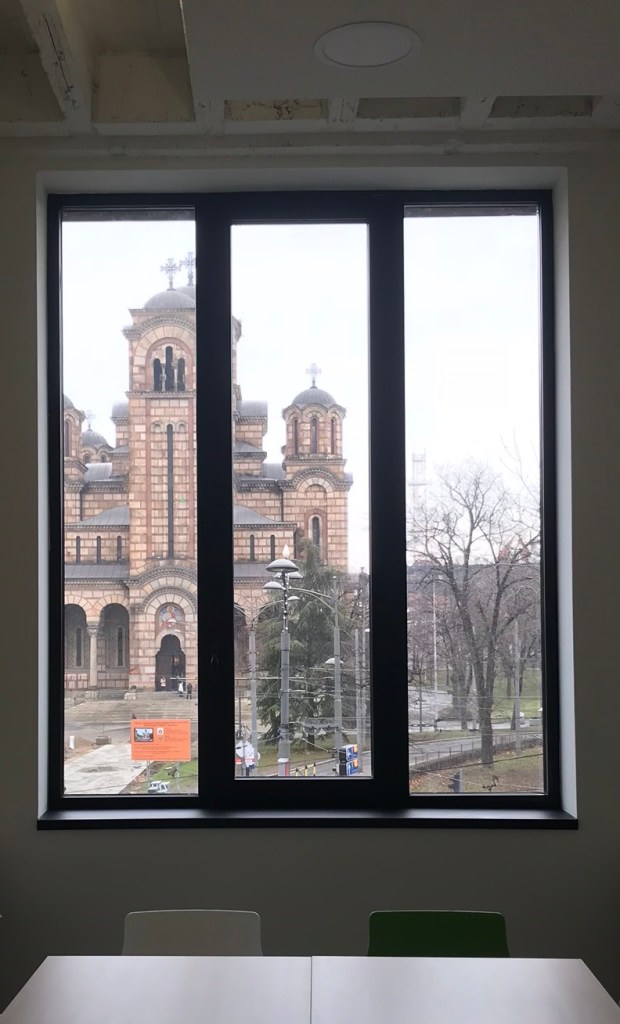
Dosledan arhitektonski izraz vremena u kom je kuća na uglu Bulevara kralja Aleksandra i Resavske nastala je čini vrednim prestavnikom moderne. Arhitekti Mihajlo Marinković, Đorđe Grujičić i Ljubiša Dragić, 1953. godine, stvorili su kompoziciju koju čine tri kubusa koja su u međusobno harmoničnom odnosu. Na uglu je najviši volumen u kom je poslovna zgrada, a u bočnim krilima smešteno je stanovanje. U prizemlju su celom površinom lokali i pešačka reprezentativna kolonada koja je prijatno proširenje na početku bulevara.

Pri materijalizaciji građevine uglavnom je korišćen mermer kao obloga na stubovima, dok su delovi fasade i unutrašnje fasade delom od mermera, a delom u venecijanskom teracu i teranovi.

Spoljašna obrada stambenih krila projektovana je različito da bi se naglasila drugačija sadržina  objketa. Fasadu čini ćelijasta struktura dubokih lođa koja je ritmovana spoljašnjom plastikom: dekorativnim panoima sa arabeskama što je u kontrastu sa geometrizovanom obradom poslovne kule. Karakterističan je krov, zatalasana linija kao spoj neba i arhitektonske strukture same zgrade, a provlači se kroz sva tri volumena. Za ovu arhitektonsku kompoziciju može se primetiti da na uzoran način odražava ideale doba. Projektovana je mala komuna sa poslovnim i stambenim delom za radnike i to u reprezentativnom zdanju koje je oličenje ideala stamenosti i geometriske preciznosti poslovnog objekta kao i dekorativno osvežen okvir stambenog ambijenta za radnike.

Koncept

Odnos prema fasadi

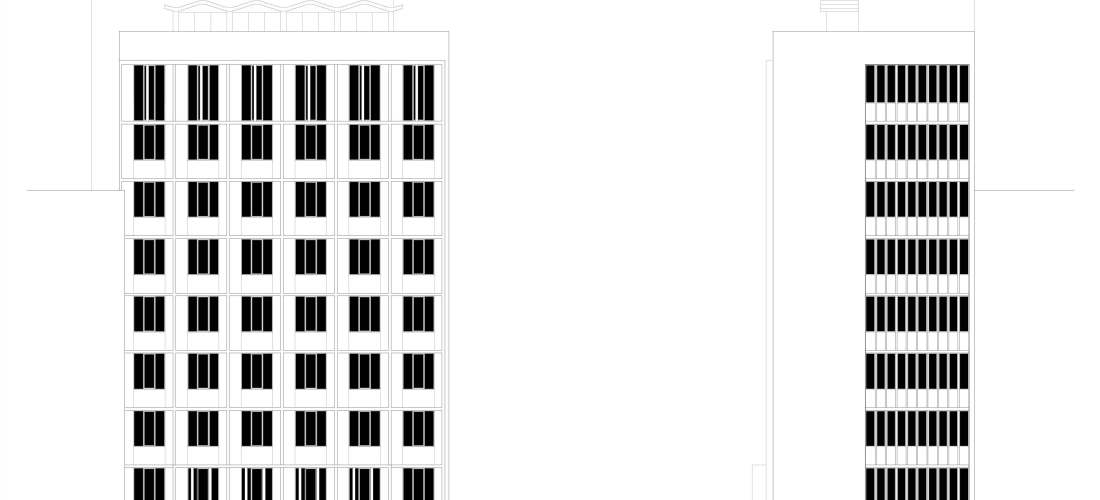
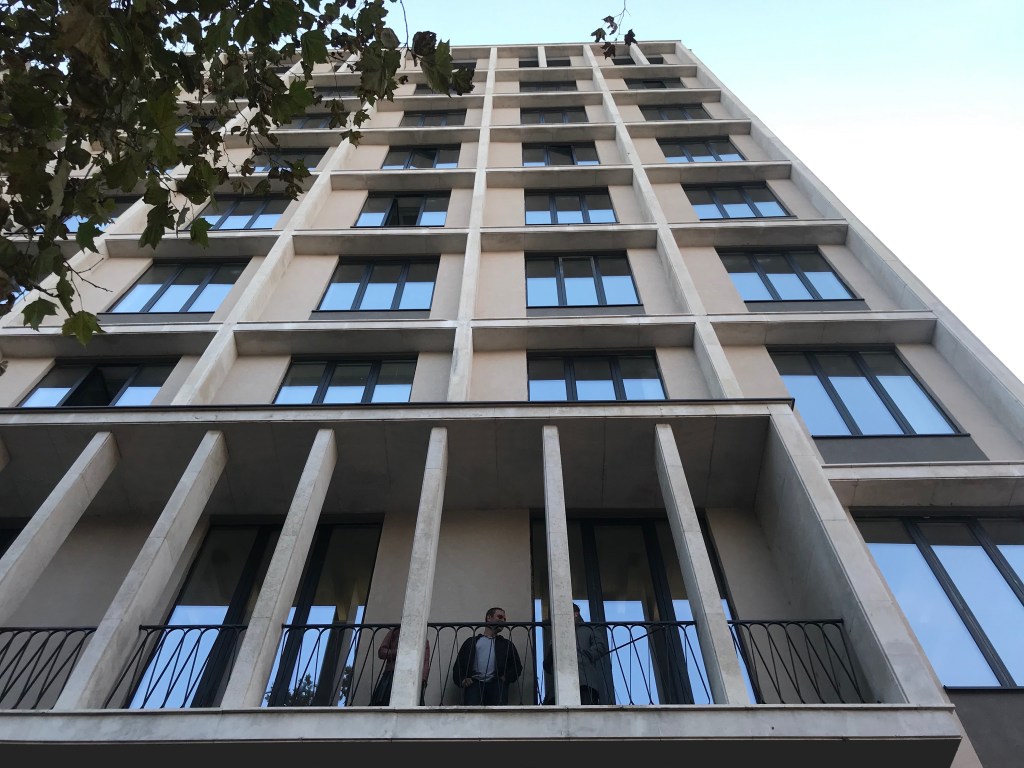
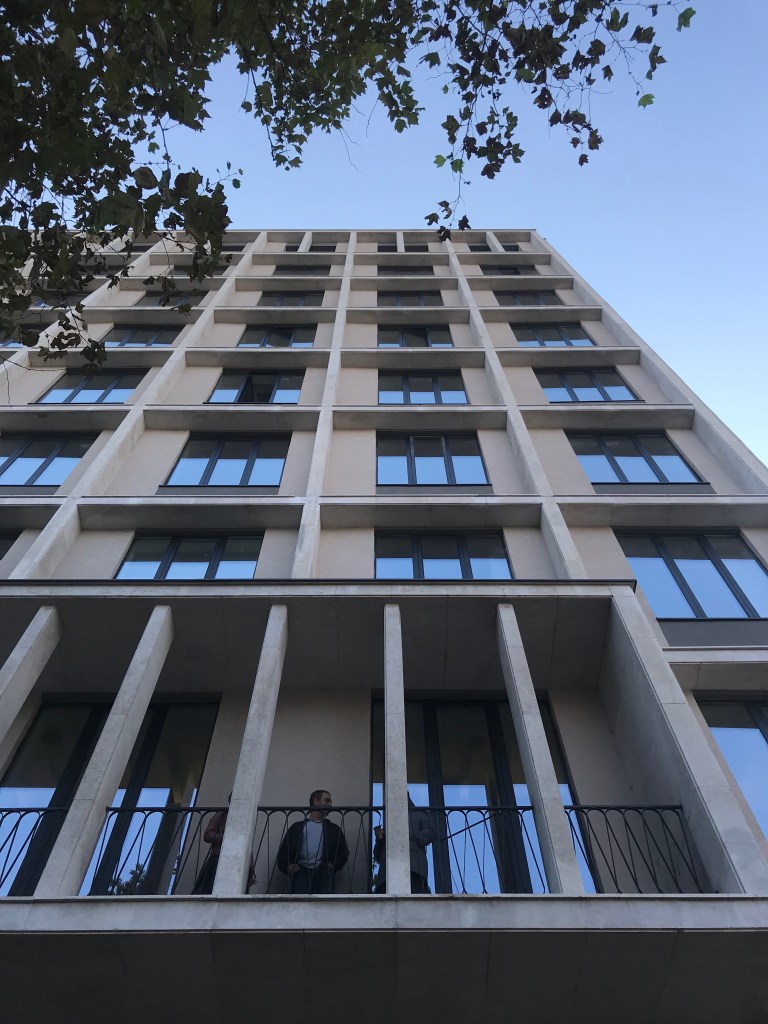
Predmet projekta je rekonstrukcija fasade i unutrašnjosti poslovne kule kao samo dela celokupne kompozicije. Kako horizontalna stambena krila nisu predmet projekta pri rekonstrukciji fasade poslovne kule težilo se za potpunim očuvanjem izgleda.

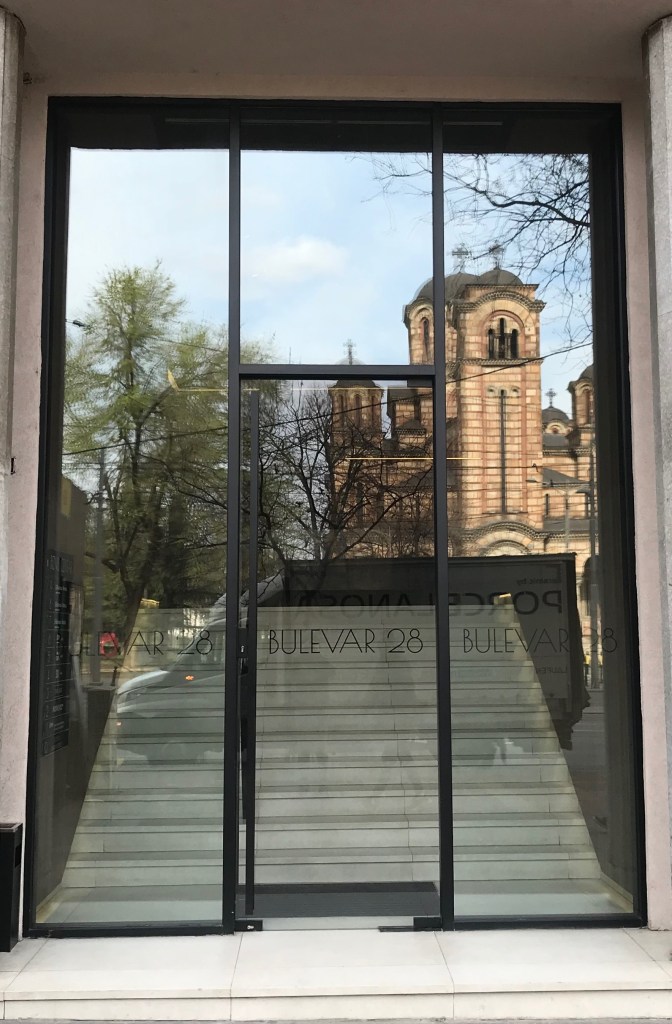
Cela fasada je očišćena, spoljne jedinice klime su skinite sa nje, a prozori zamenjni u saglasnosti sa današnjim zahtevima građevinske fizike radi poboljšanja termičkog komfora. Jedina promena nastala je u podeli broja polja na prozorima gde je smanjena usitnjenost. Opravdanje za takav odnos našli smo u arhivskoj građi gde se vide crteži fasada autora na idejnom i realizovanom nivou. U idejnom nivou autori su u prošlosti težili smanjenju podela polja u staklima, tj. većim staklenim komadima bez prečki, a koja nije bila omogućena tadašnjom tehnološkom realnošću u tržišnoj proizvodnji.

Današnji rekonstruisani izgled fasade je u potpunosti urađen u saglasnosti sa ondašnjim željama autora o podeli prozora. Ovakav odnos prema rekonstrukciji u potpunosti štiti naše modernističko nasleđe bez preke potrebe u nametanju novog već ka zaštiti arhitektonskh, vremenskih i istoriskih vrednosti koje ovaj objekat ima.

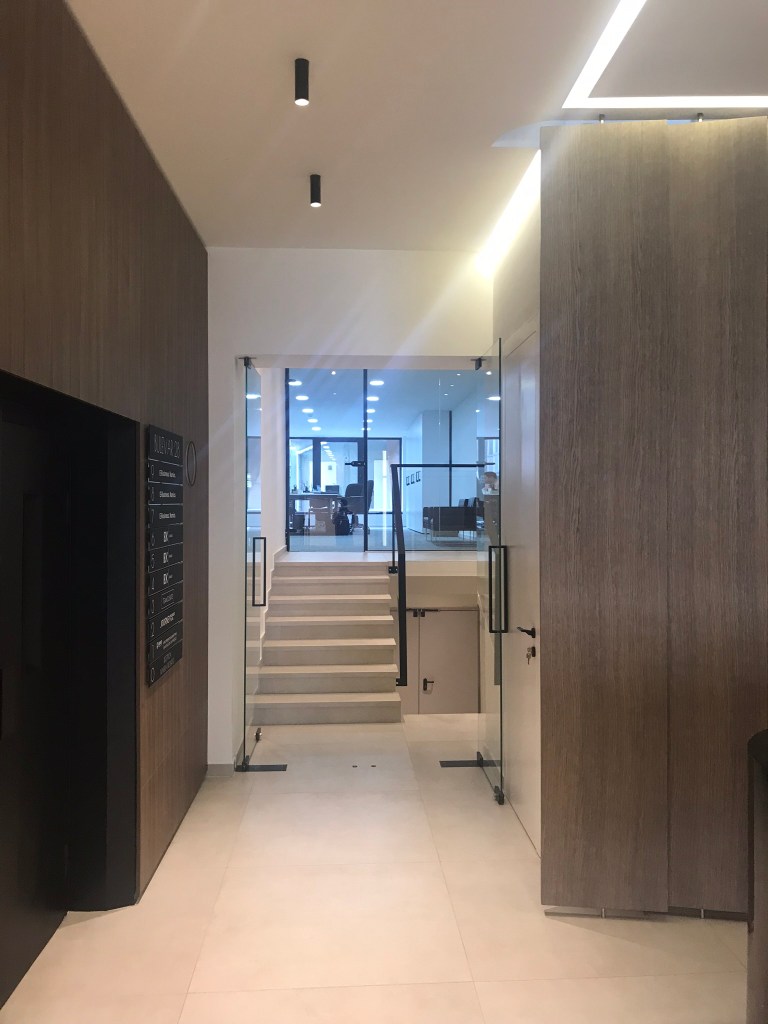
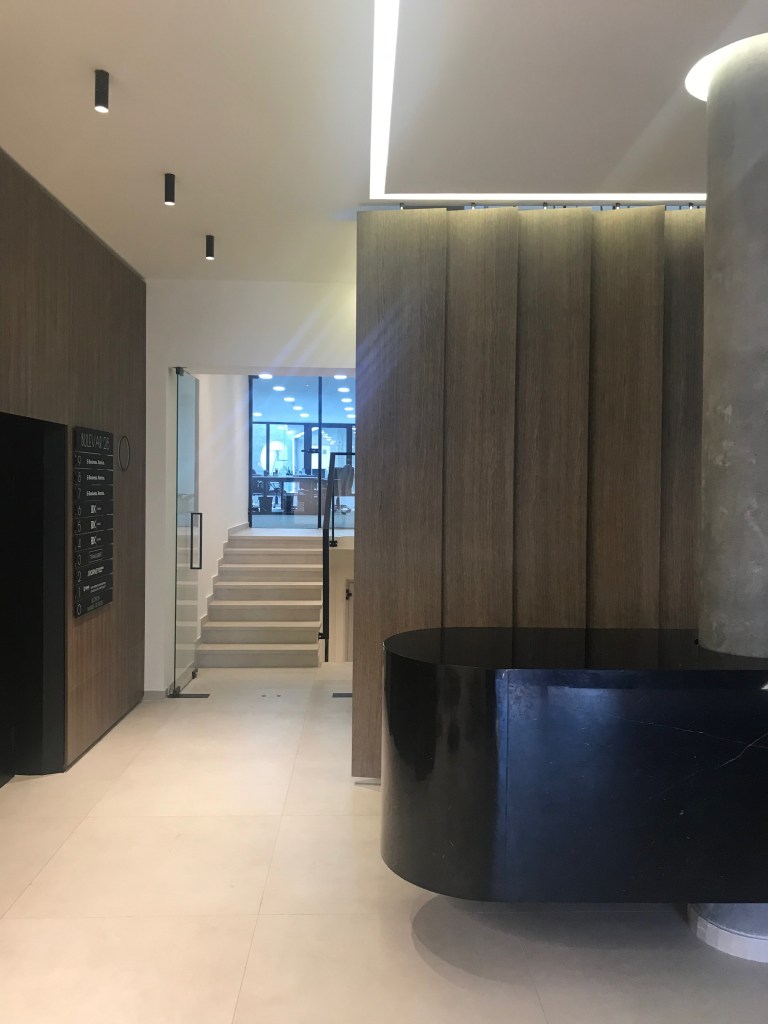
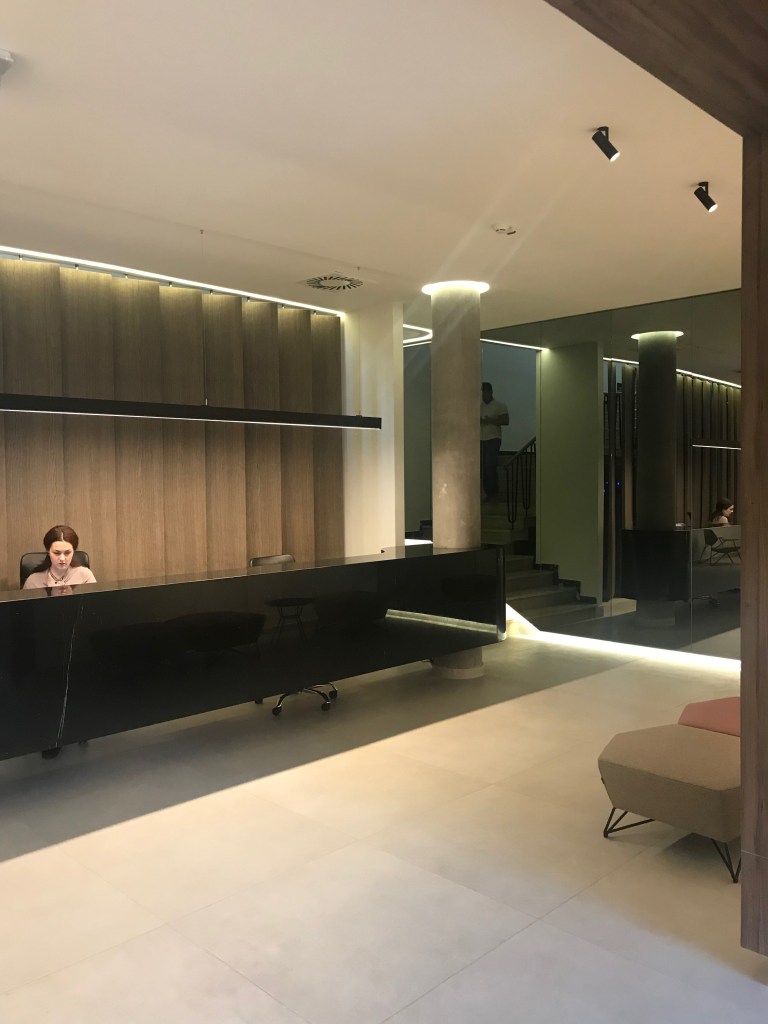
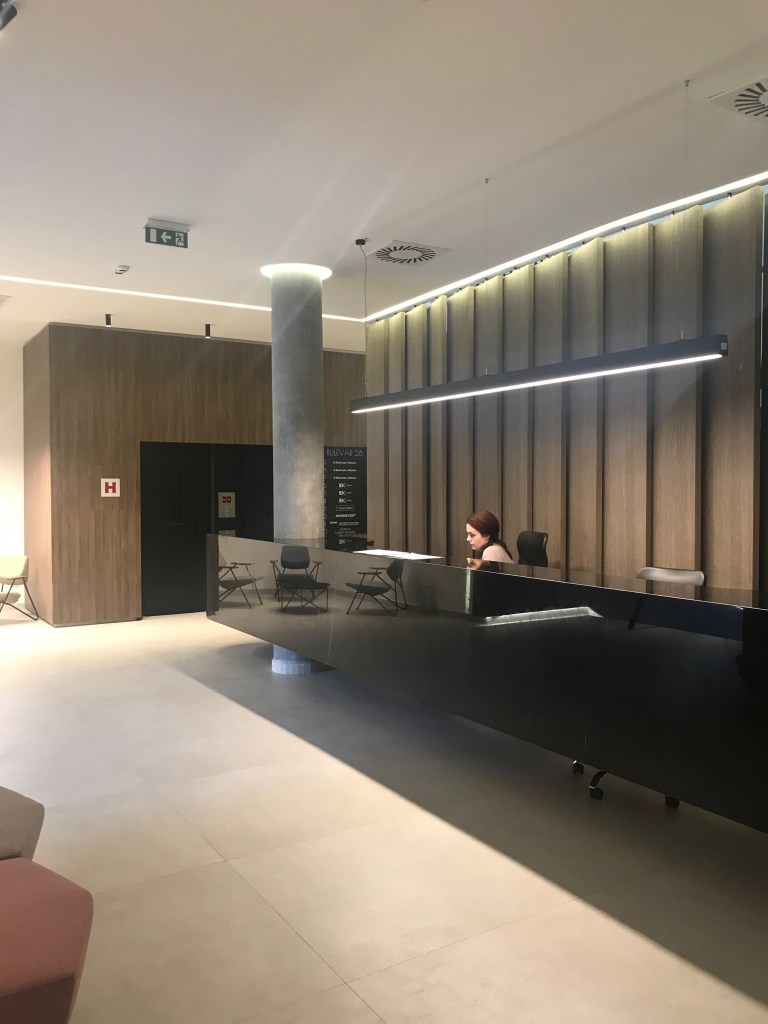
Odnos prema unutrašnjost

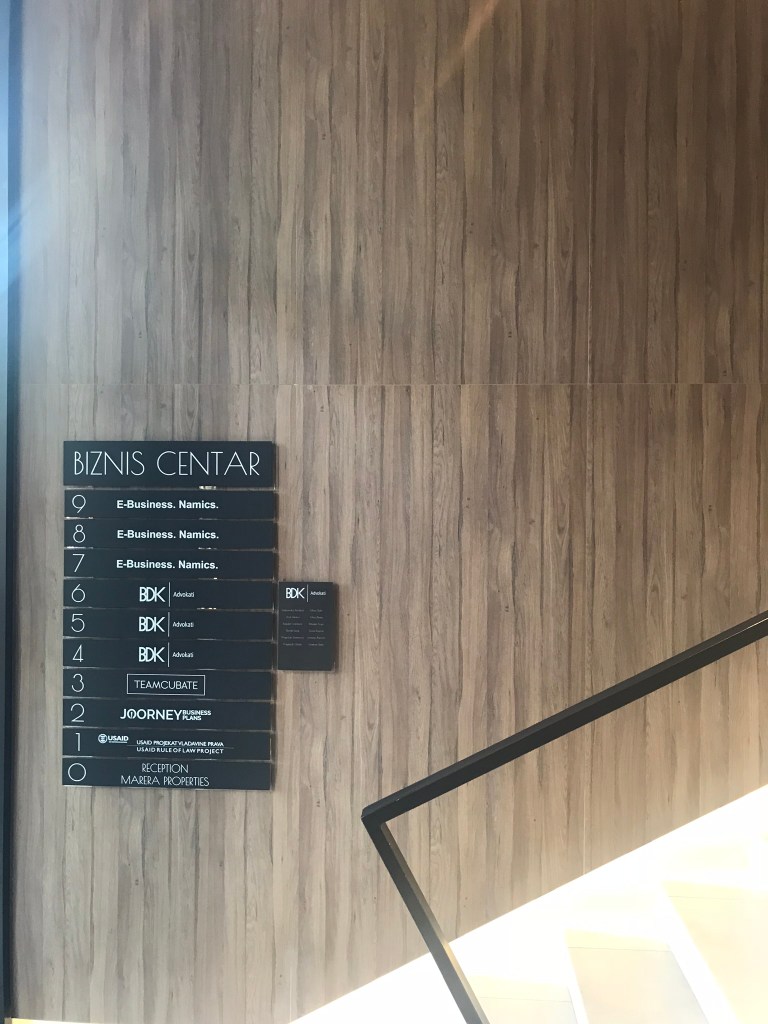
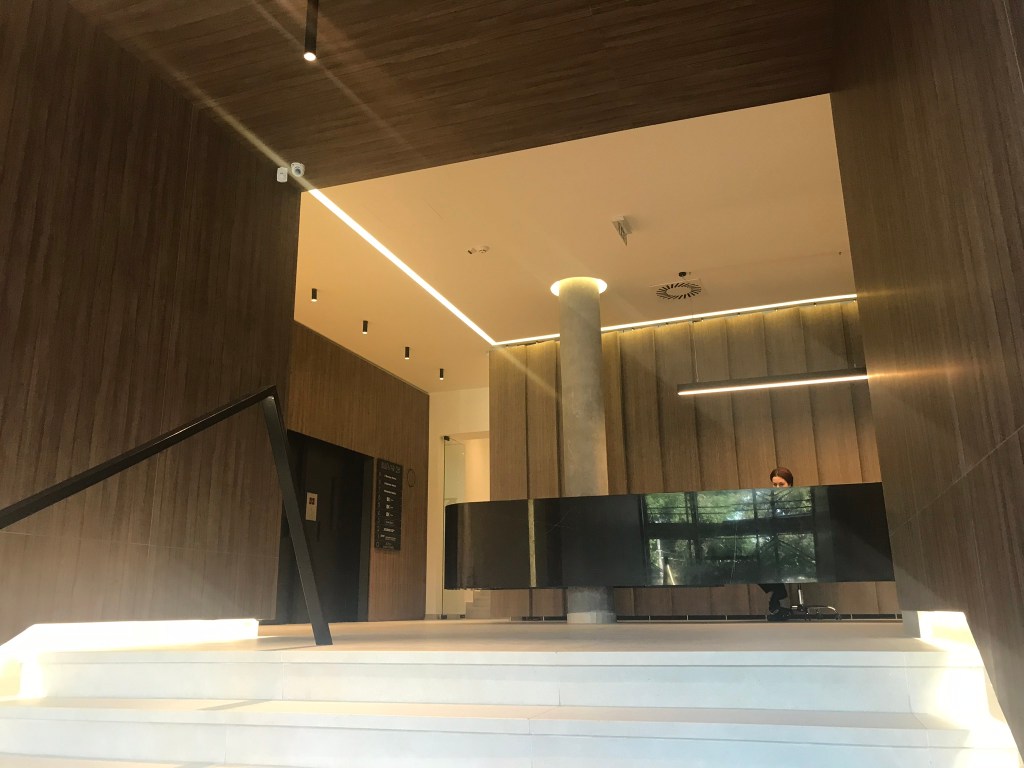
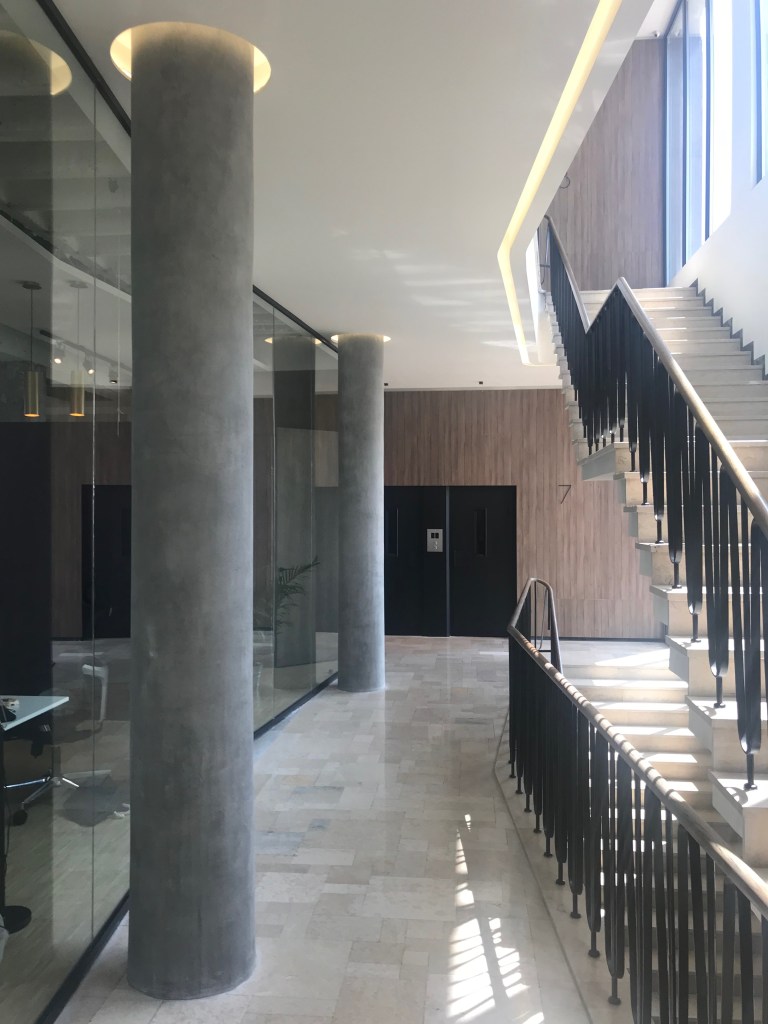
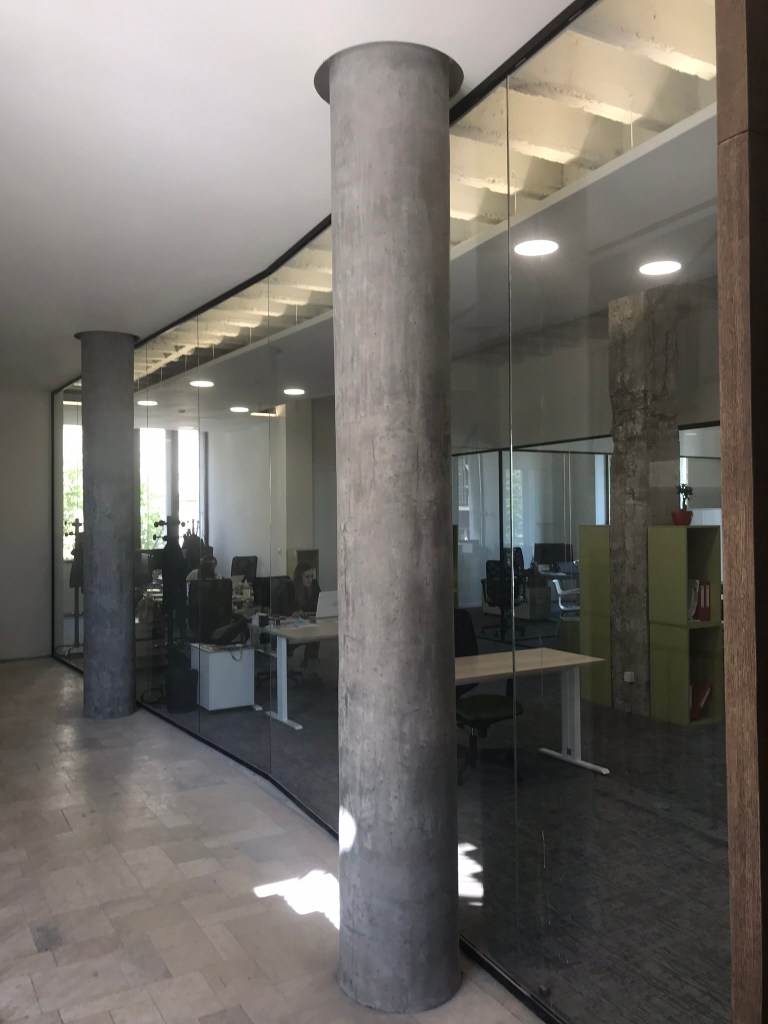
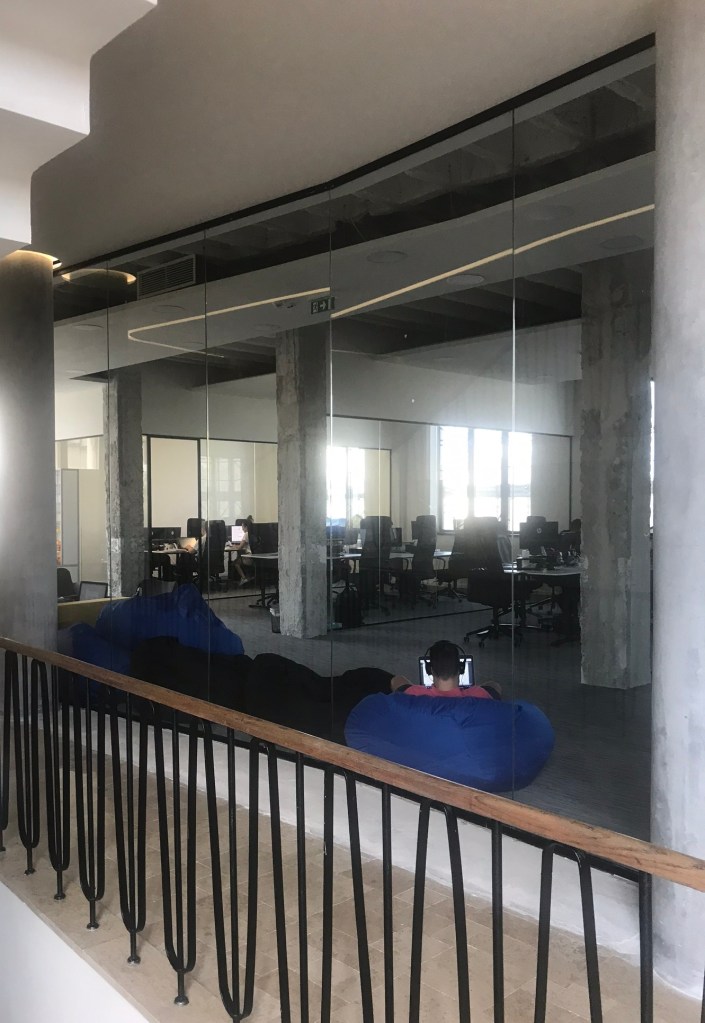
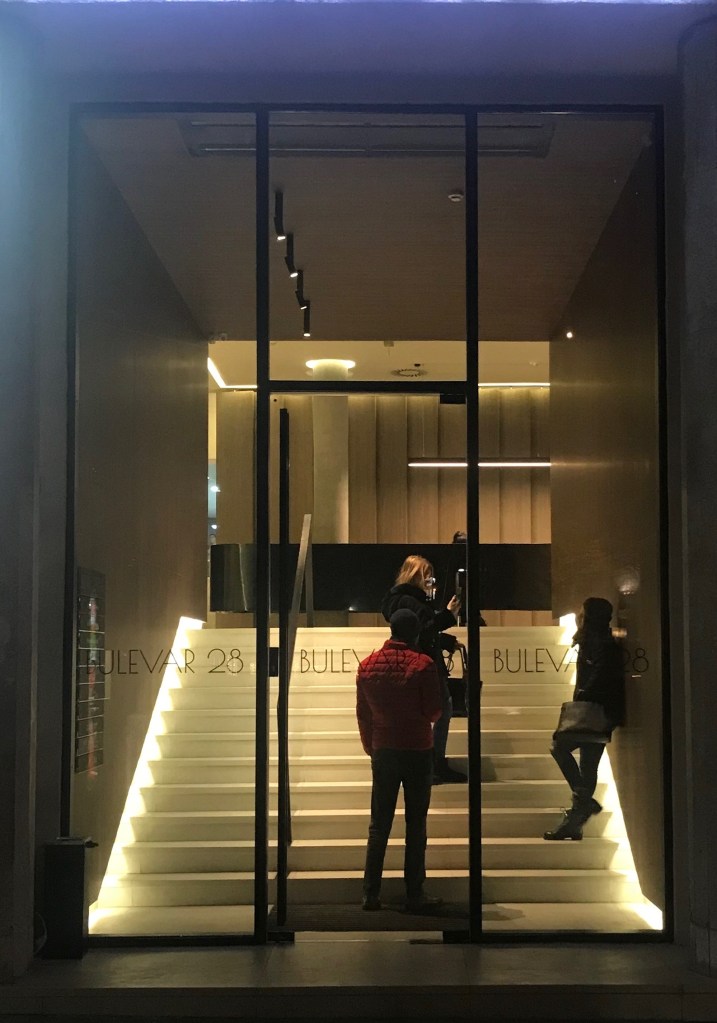
Za razliku od odnosa koji smo imali prema fasadi u samoj unutrašnjosti zadržani su samo vredni delovi, materijalizacije spratnih podesta od kamena, centralnog stepeništa i ograde kroz sve etaže. Kamen u podu je očišćen, a dotrajali ili ispucali delovi samo su zamenjeni. Metalni nosači ograde očišćeni zajedno sa drvenim rukohvatom, ponovno bojeni i zaštićeni. Ostali većinski deo prostora u prošlosti je bio izgrađen od nekvalitetnih materijala koji su vremenom dotrajali, tako da je taj deo prostora očišćen kroz sve etaže. To je urađeno do samoga armiranog betonskog skeleta sa iznošenjem svih lakih pregrada i čišćenjem plafona do rebara sa iznošenjem karatavana. Posebna pažnja je posvećena dizajnu ulaznog hola koji prirodno svetlo ima samo iz ulaznog dela u kom je stepenište vraćeno na prvobitan izgled. Kroz sve etaže usvojen je jedinstven dizajn u odnosu prema ulaznoj partiji za svaki kancelarski sprat sa istom oblogom oko liftova. Isti odnos prema plafonu usvojen kroz sve etaže sa prilagođavanjem detalja za svaki etaž prema finalnoj dispoziciji nameštaja svakog budućeg korisnika prostora.