Client: City of Vilnius
Architect: Ljiljana Čavić, Riste Dobrijević
Year: 2019
Location: Vilnius, Lithuania

Concept
Sun at Sunset
Sun at Sunrise
Hill on the Hill
Drop in the river Neris
Fog in the Show
Town-planning concept
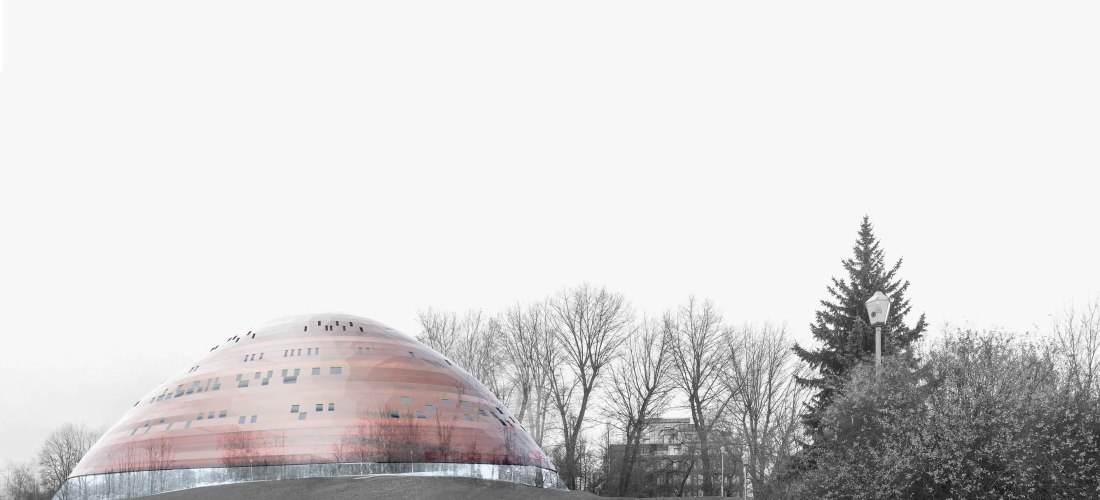
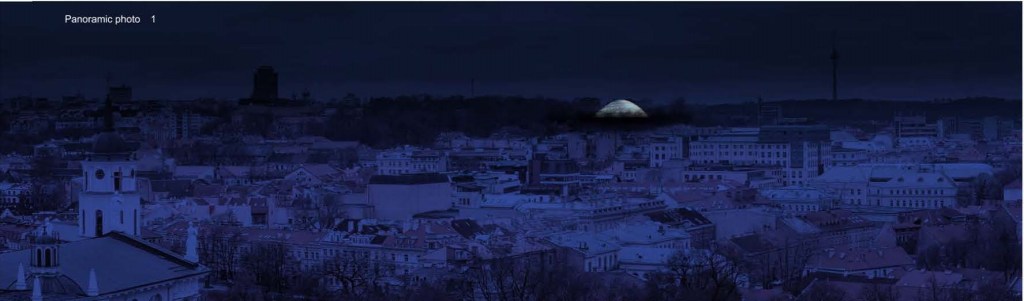
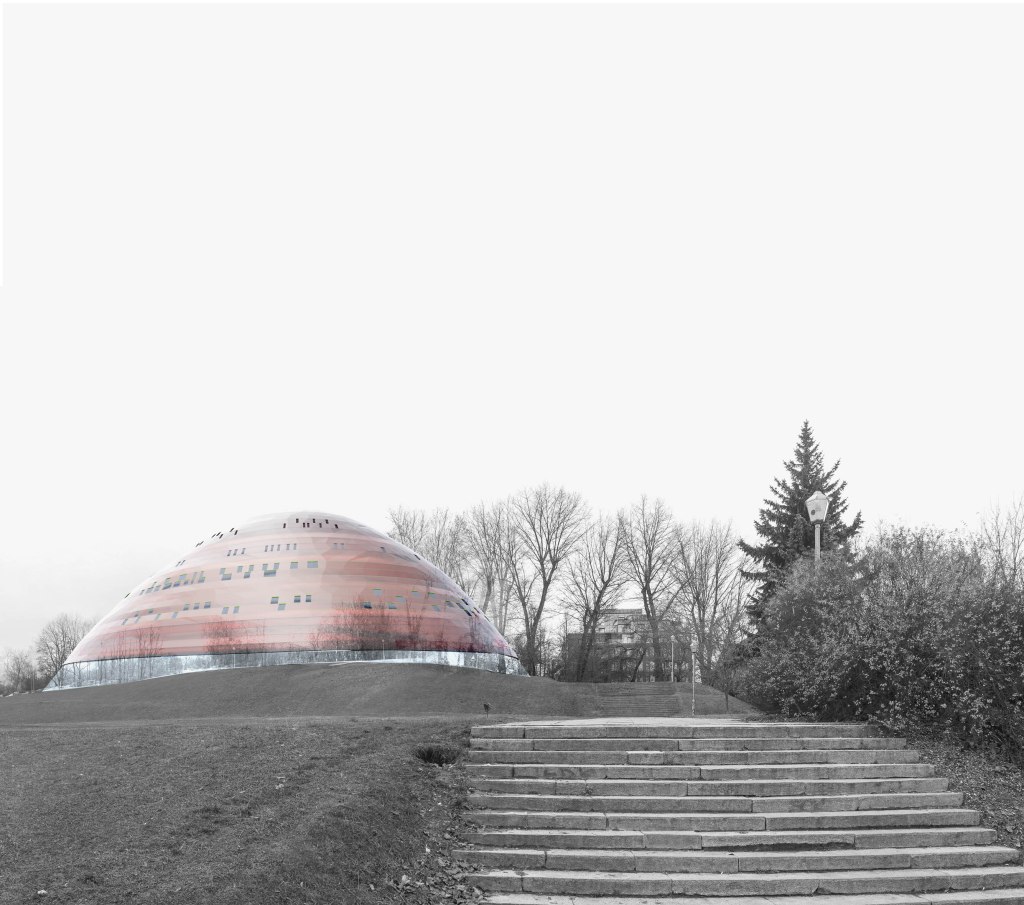
The proposed landscape-building solution is conceptually inspired by hilly natural identity of Lithuania in general and insertion environment of the Tauras Hill in particular. On one hand, the building is designed as natural continuation of the site and on the other it is differing and contrasting element to other urban-architectural objects of Vilnius urban tissue.
The idea is to create an authentic presence which would stand out from the common architectural heritage of Vilnius yet making a harmonious composition with its surrounding.
Transport concept
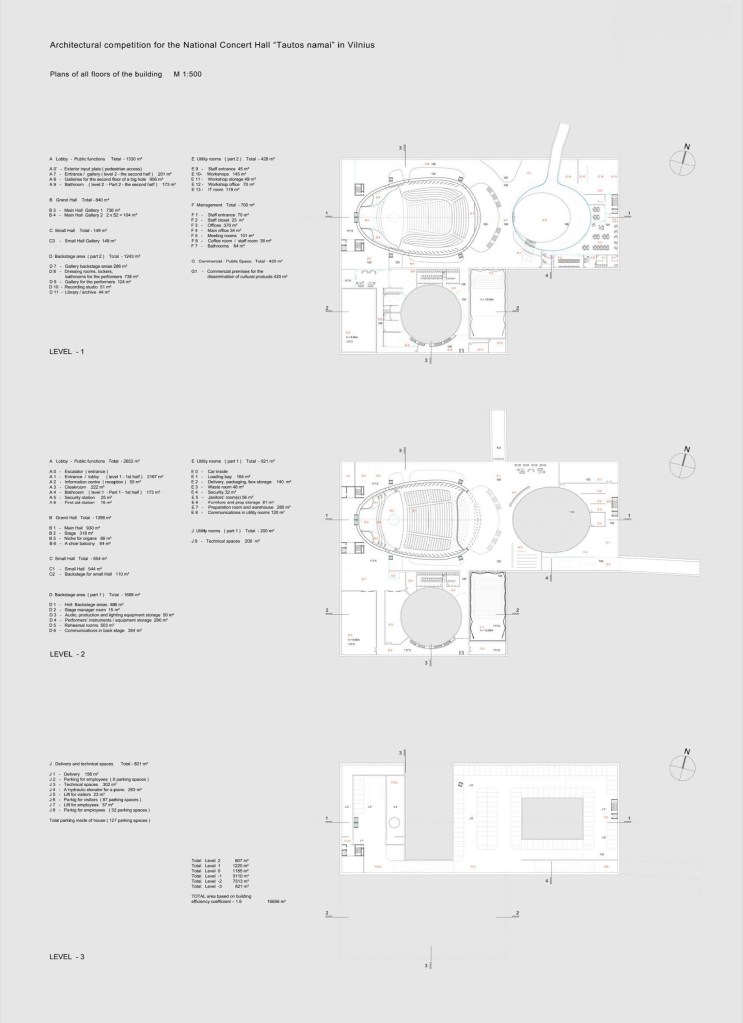
The vehicle traffic to the site is made from the eastern and western directions. These two approaching roads are connected by conditioned vehicle access that permits permeability throughout the Tauras Hill. The existing parking lots near PamėnkalnioGatvė and at the foot of Tauras Hill are replaced by underground garages allowing formation of reception squares that would be “urban foyers” of the National Concert Hall.
The proposal takes into consideration the existingterritory maintenance project fromVilniausPlanas (2018). It incorporates and respects the positioning of the following elements: Stairs to the National Concert Hall, Pedestrian and cyclic paths, Lifts, Amphitheatre, Area with benches, Café, Children playgrounds. Sport / training area, Pedestrian viaduct, Pedestrian paths, Planting area, Blooming meadow, Green plantation composition, Composition of low and medium plantation, Vegetation pollution and noise barrier, Sleigh Area.
It proposes different positioning for the skating rink incorporating it into the architectural and landscape solution of the proposal.
Environmental concept
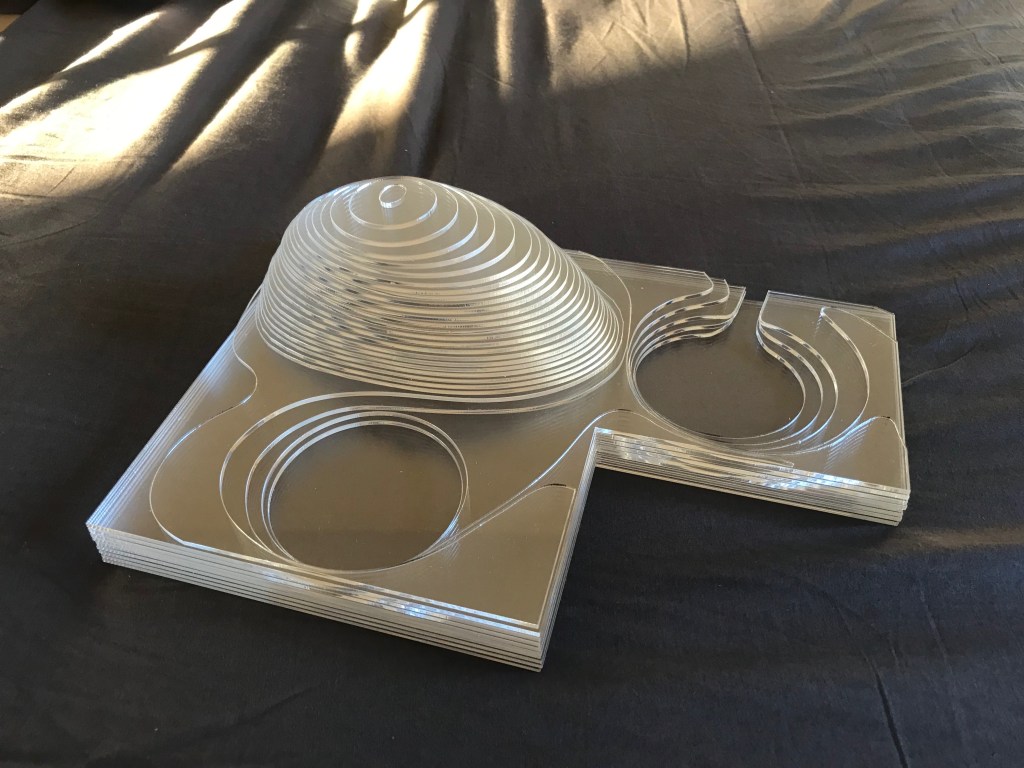
The proposal is a landscape-building solution concentrates a large portion of the built structure underground. This solution allows for free and public usage of big portion of the building lot (70%) which is covered by grass and vegetation. The roof of the underground part of the building creates two different outdoor amphitheatres: east and south. The east one is serving as outside foyer while the south one is a multifunctional stage and auditorium that during the winter time can be turned into skating rink. Both places can be used for outdoor concerts and other cultural gatherings.
Another important environmental impact of the proposed landscape-building is its façade. The main proposed material for the aboveground building part is transparent wood. Apart from its ecological and environmental benefits this novel technology provides a desirable architectural effect.
“Wood’s naturally good thermal insulation makes itthe material of choice in both cold and hot climates.There are thus significant CO2 savings to be madeby using timber in the construction of houses andother buildings, both in terms of embodied energy andin-use energy efficiency.At the end of their service life, wood products can, inmost cases, be recycled, thus extending the carbonstorage effect, and/or be used as carbon neutral fuel,substituting fossil fuel.” From “Tackleclimate change:build withwood”

 C A D O